TYPE: 2nd Yr Study Trip Project
LOCATION: Chikan, Guangdong Province, China
DATE: 24th October 2024 - 5th November 2024
METHODLOGY:
- Constructed Analysis
- Photography
- Mapping
- Huidao (Vernacular Plaster Work)
EQUIPMENT & SOFTWARE:
- Canon R6
- Tripod
- Jigsaw
- Metal Wire
- Concrete Board
As part of the ‘72 Hours’ exhibition in Chikan, each group was tasked to complete a constructed analysis research project alongside a formulated response. My project focuses on capturing water and recording watermarks within the internal light well at Flower Court. A series of rain instruments have been constructed using a lime-based plaster, prepared through the fermentation of glutinous rice used in traditional craft of Huidiao decoration in Kaiping, Guangzhou. These hand-modelled objects are crafted in spherical forms of varying scales. Over time, these instruments will be marked by rainwater dripping, diffusing, and flowing over them. Natural lime build-up through rainfall will also add to and deform the strategically placed receptacles made with the same material. The ageing process becomes an integral part of the work, shaping it through form and time.

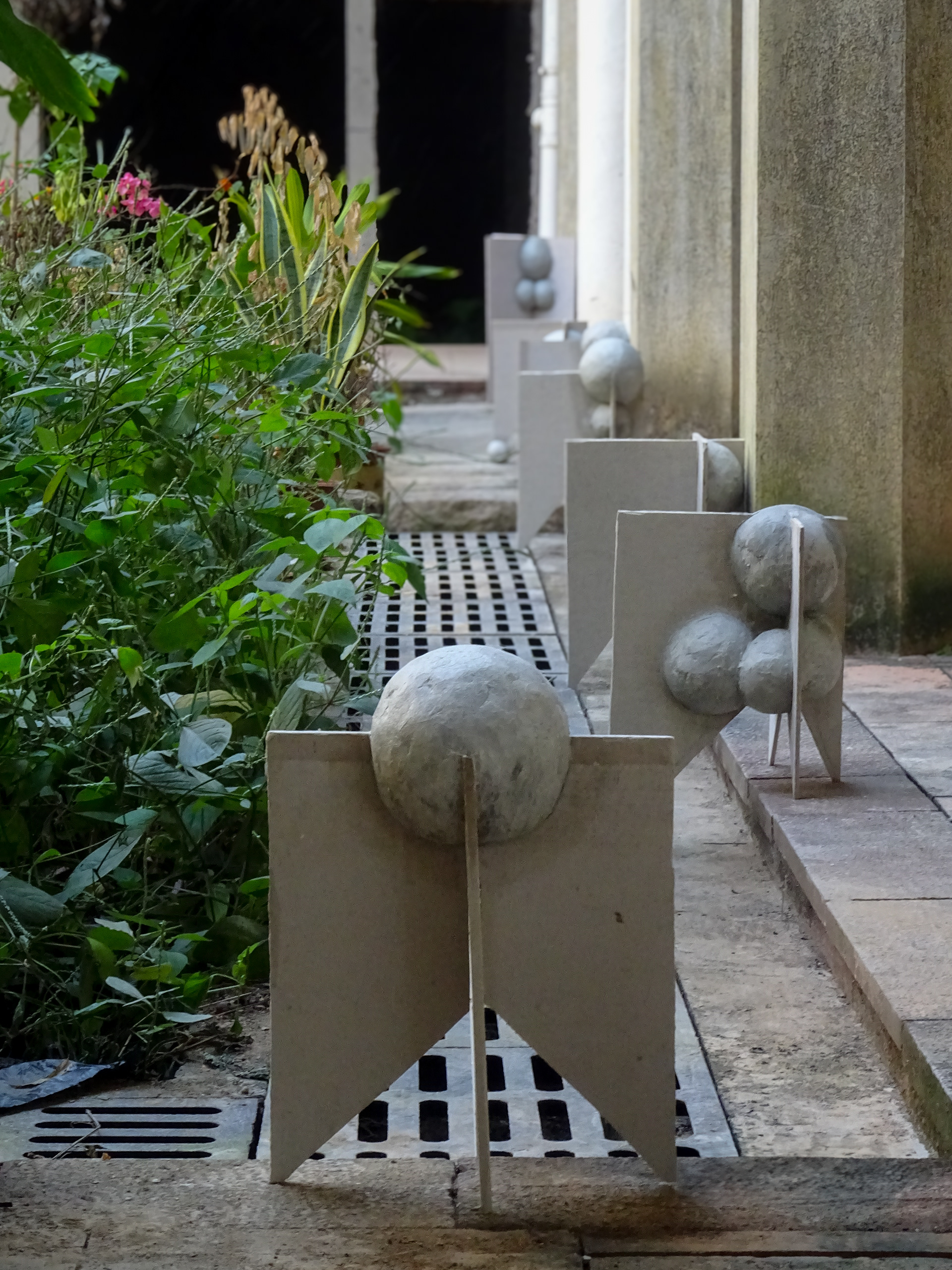
the drip.
MAPPING OF WATERMARKERS
The project started with an observation, within the Flower Court there were a number of constant drips coming from the building; even on a very hot day. Due to the speed that the water was evaporating, these drips created lime stalactites from the ceiling, as well as a mark on the floor.
We began studying this drip throughout the course of a day, mapping the diameter of the dispersion of the drips when they hit the ground. Its this measurement of 180mm that influenced the size and shape of the objects going forward.
An important part of a constructed analysis response is begin thinking about how we want to manipulate this phenomena, what will be our objects influence.
We then created a series of rain instruments, each with their own individual gesture or test.


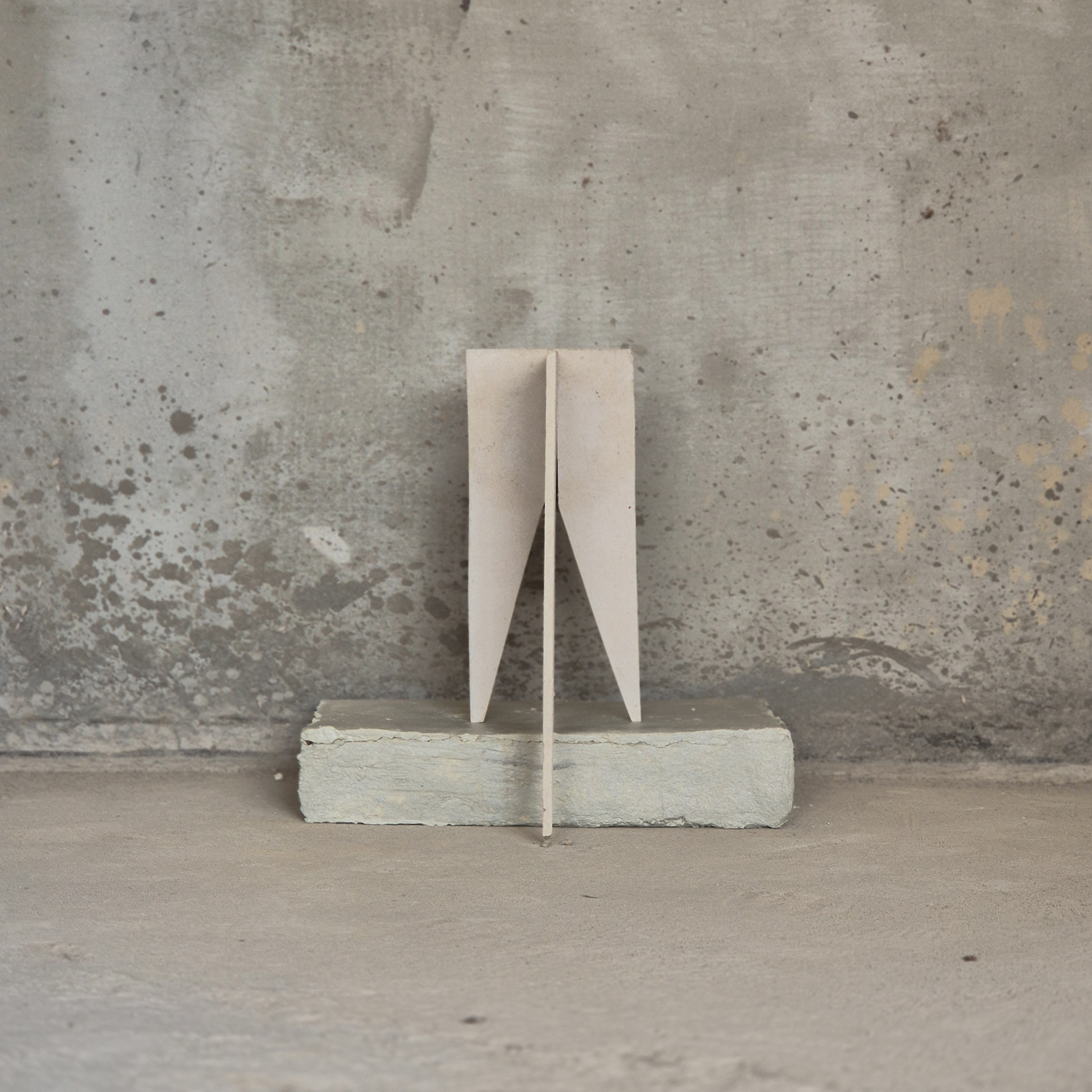
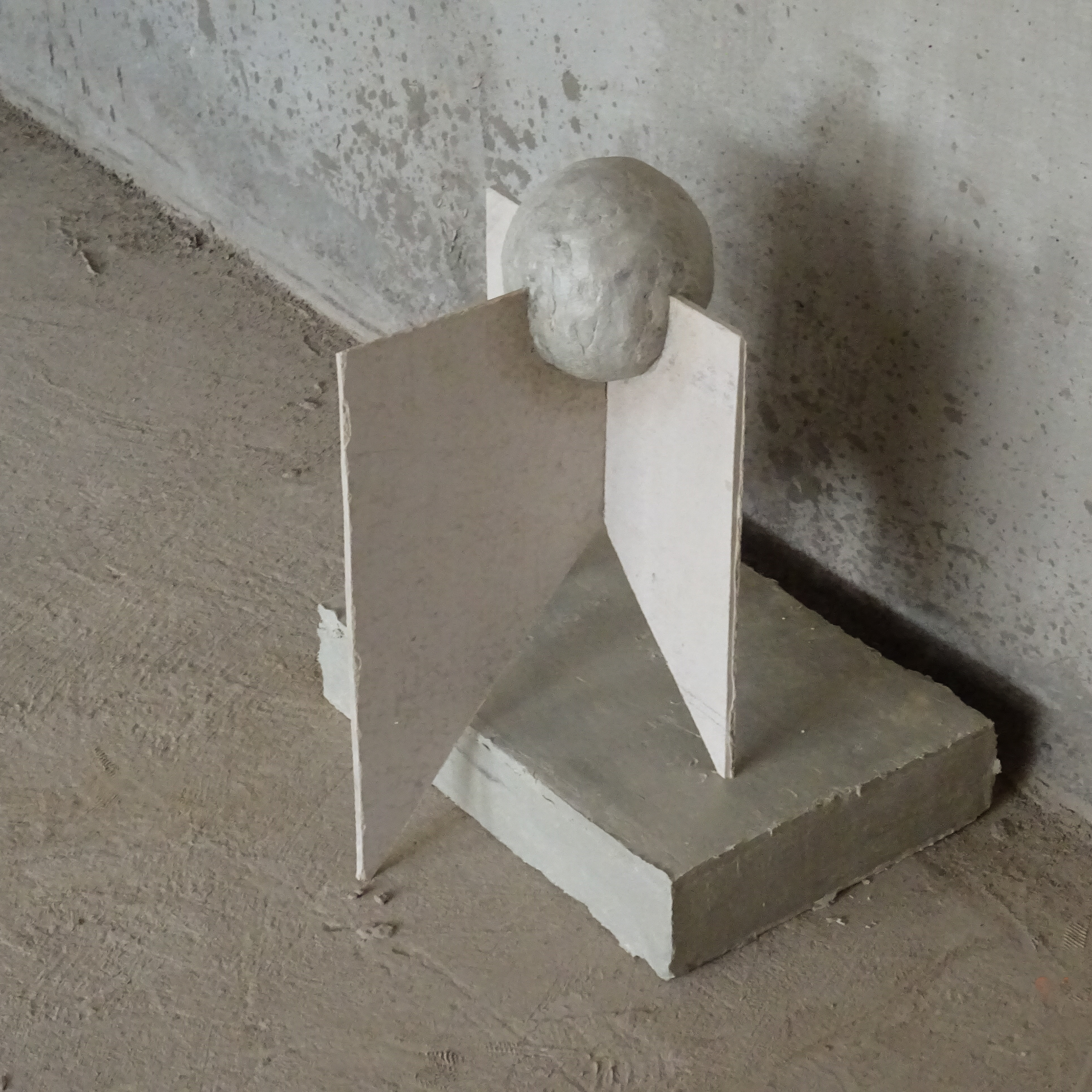
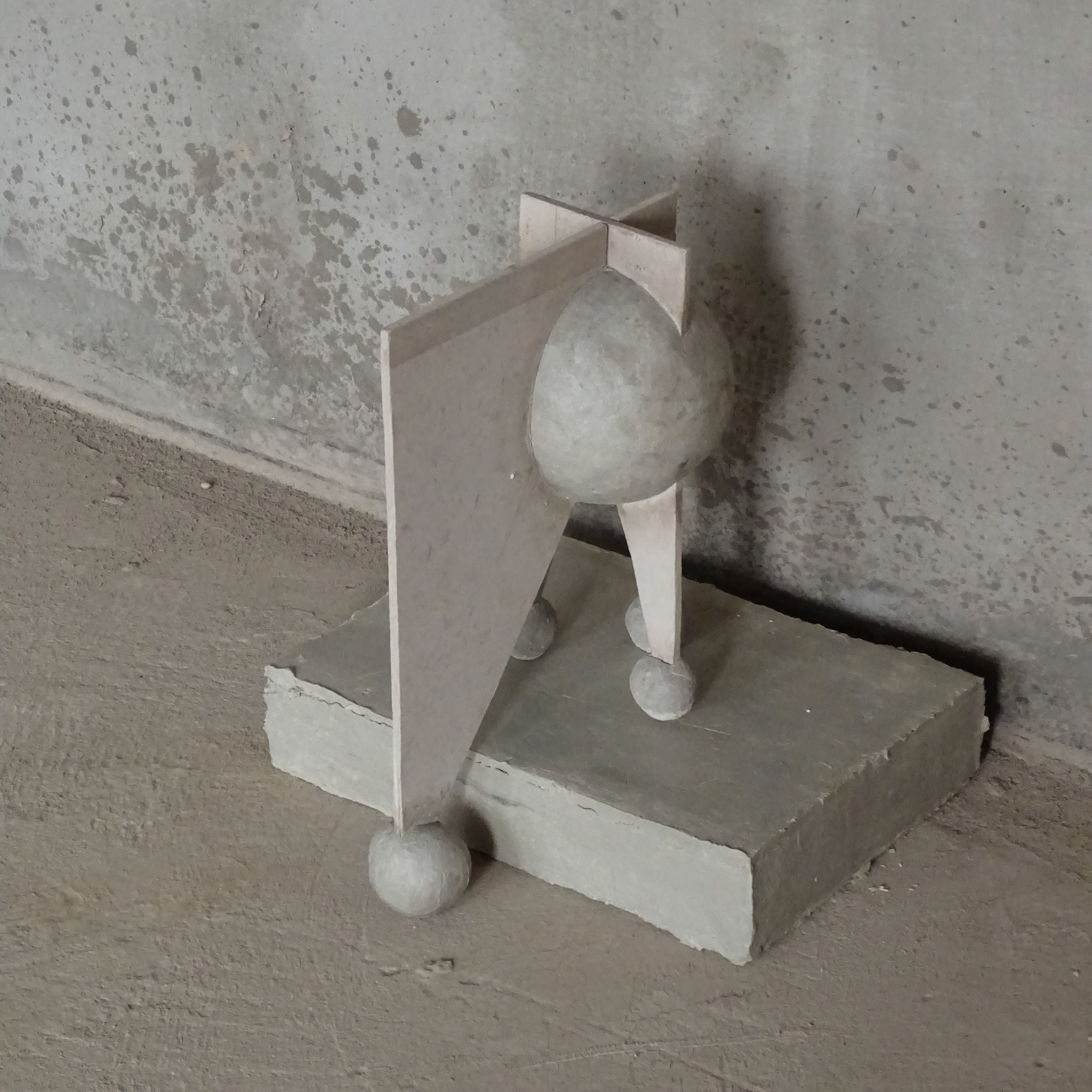


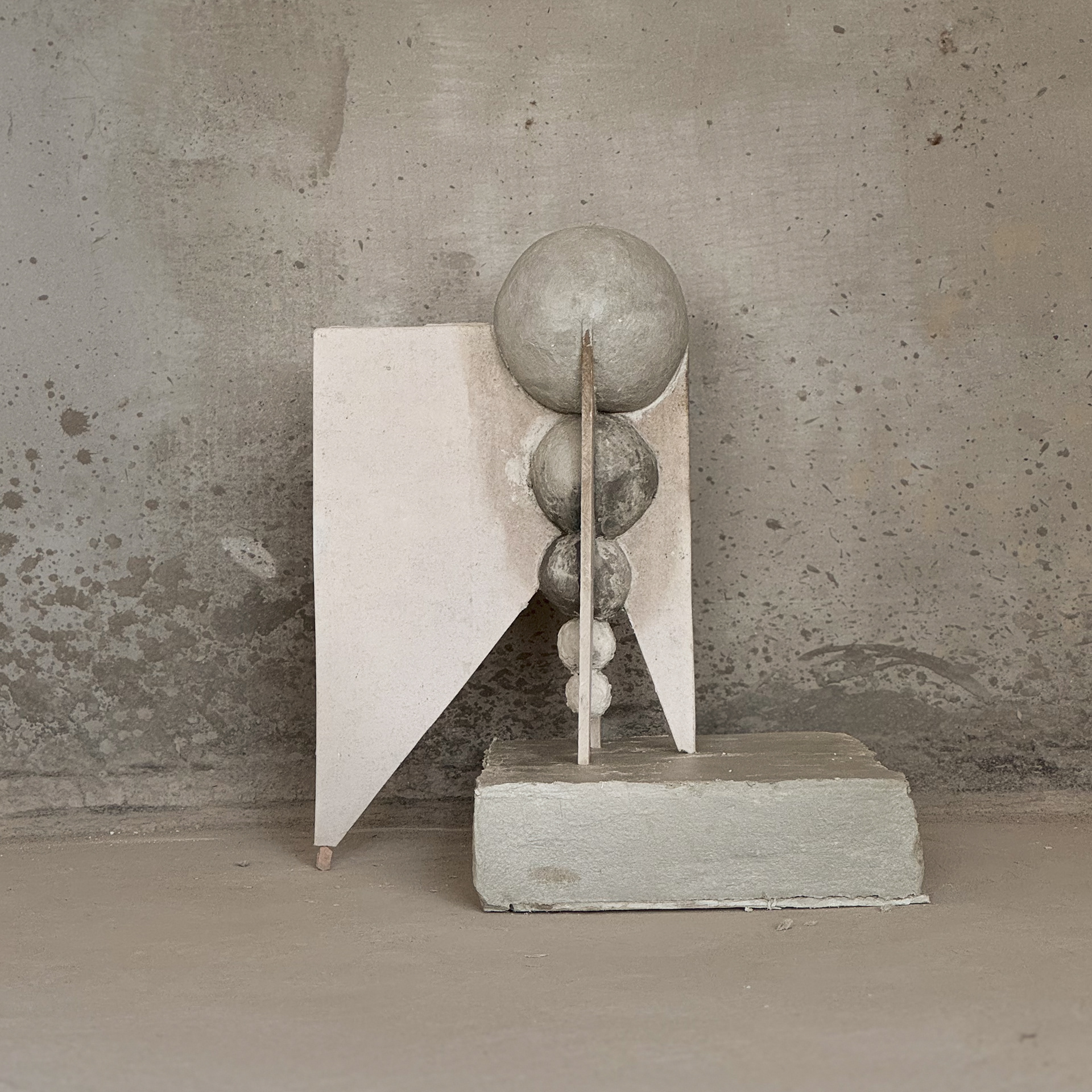
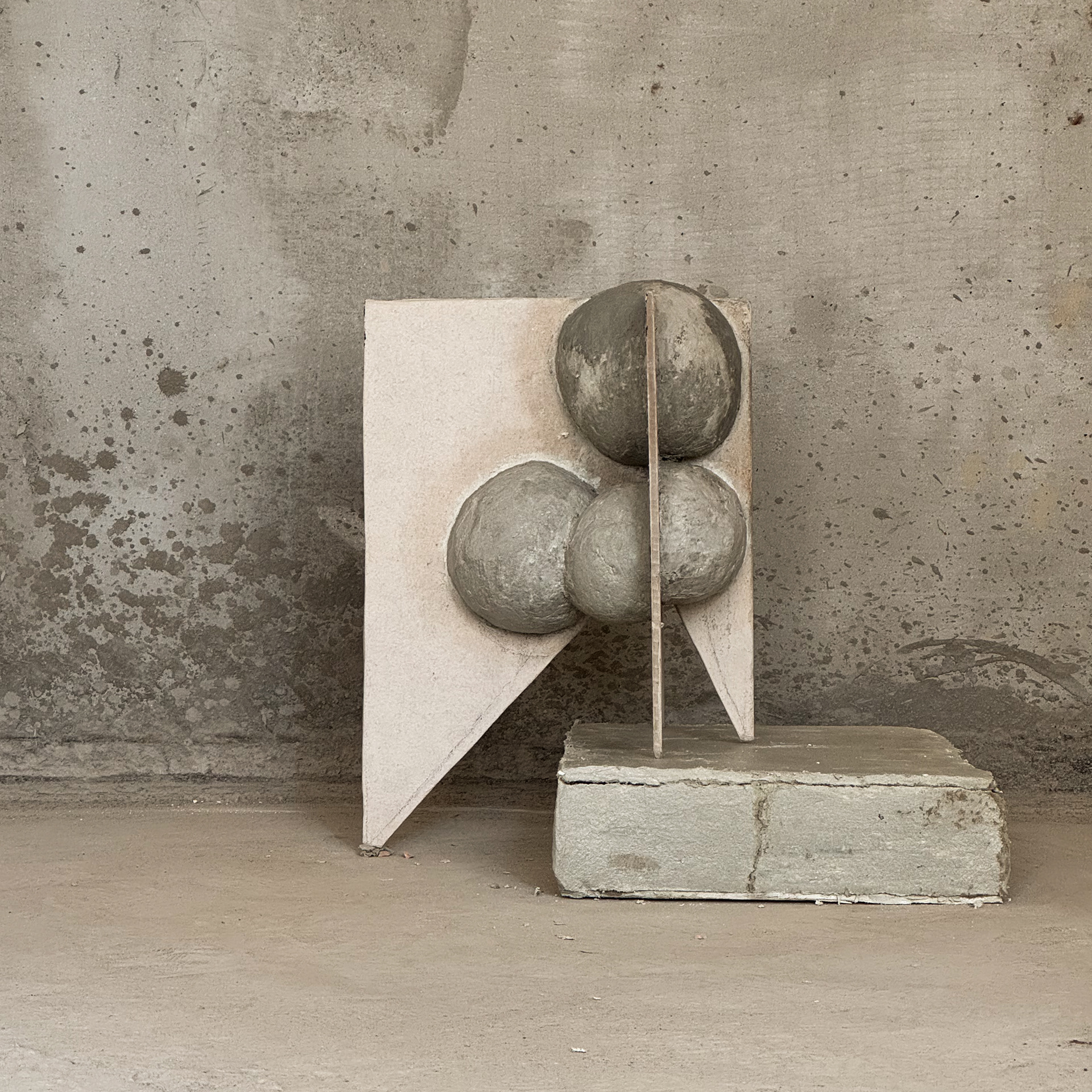

the series.
MANIPULATION OF WATERMARKERS
Each object that we created had a different intent, whether its to focus, collect or diffuse, they each were an individual object in a series. As we tested each object, we learnt things about how water interacts with a sphere, honing our craft and further defining our intent.
Each object was an iteration leading up to the creating of our final object. The form of the object but also its success relied solely on the testing of the other objects. Leaving us with a final piece that is designed specifically by place and its phenomena, and through a rigorous testing process of how that phenomena acts.


