TYPE: Design Project 3rd Yr (Undergraduate)
LOCATION: Stonehouse, Plymouth, United Kingdom
DATE: 29th September 2020 - 7th February 2021
METHODOLOGY:
- Casting
- Physical Modelling
- Master-planning
- Hand Drawing
- Community Engagement
- Physical Modelling
- Master-planning
- Hand Drawing
- Community Engagement
EQUIPMENT & SOFTWARE:
- Adobe Creative Suite
- Autodesk Revit
- Canon DSC-HX60V
- Tripod
- AutoCAD
- Autodesk Revit
- Canon DSC-HX60V
- Tripod
- AutoCAD
During this period of political uncertainty and the ever growing dis-juncture within our Government, on top of multiple Brexit push backs, a divided country and almost a suspension of parliament, people have lost faith in their political leaders to make the correct decisions on behalf of them. This distrust is ever so present in Stonehouse, where many of the residents feel forgotten by the council, this adjunct to the current climate is a problem. Would the people take power into their own hands? Who would govern them? This program intends to experiment with these questions and come up with a possible solution.
All proposals are placed within a nexus of micro districts, located upon a new processional route, with the intention of maximising community impact. New hinges to the centre were introduced to maximise footfall from around the wider city. Four areas of influence were identified. Our response to these issues, was to make Stonehouse completely inclusive, introducing Stonehouse as its own municipality; its own independent micro-state. This allowed for many new freedoms, the ability to cater for all needs; socially, politically, economically and environmentally.

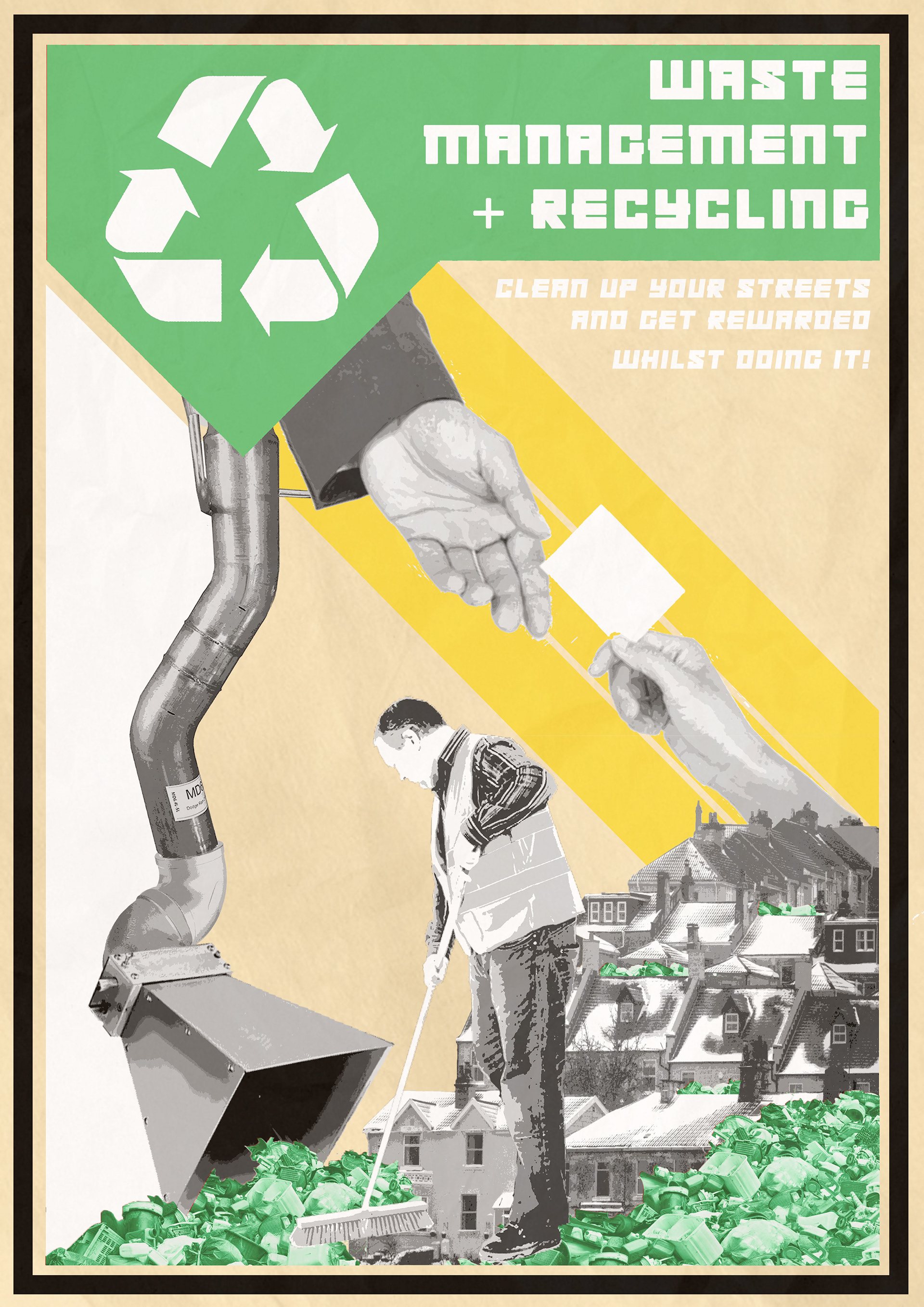
Within our masterplan every project had aspects of self-help and providing people with the opportunity to transform their own position. As a outreach program each proposal created community posters to advertise each individual method of community assistance.



a decentralised municipality.
political restructuring and social identity
By turning Stonehouse into a municipality, it had many benefits but politically it provided the us the opportunity to create a decentralized political system that moved power from the local council into the hands of a group of elected local officials.
I identified 32 micro communities within Stonehouse, these were formed through my research into the hard/ soft barriers of site as well as identifying social districts. These pockets are mostly streets but were chosen in relation to the relationship you would have to your neighbours. As a form of liquid democracy, one person from every micro community will stand and act as a representative for their street to discuss the issues and begin to formulate solutions. This system benefits from the small scale size of Stonehouse because it relies on people not viewing the nominees as politicians but as people; as their next door neighbour.

the stonehouse system.
redefined liquid democrasy
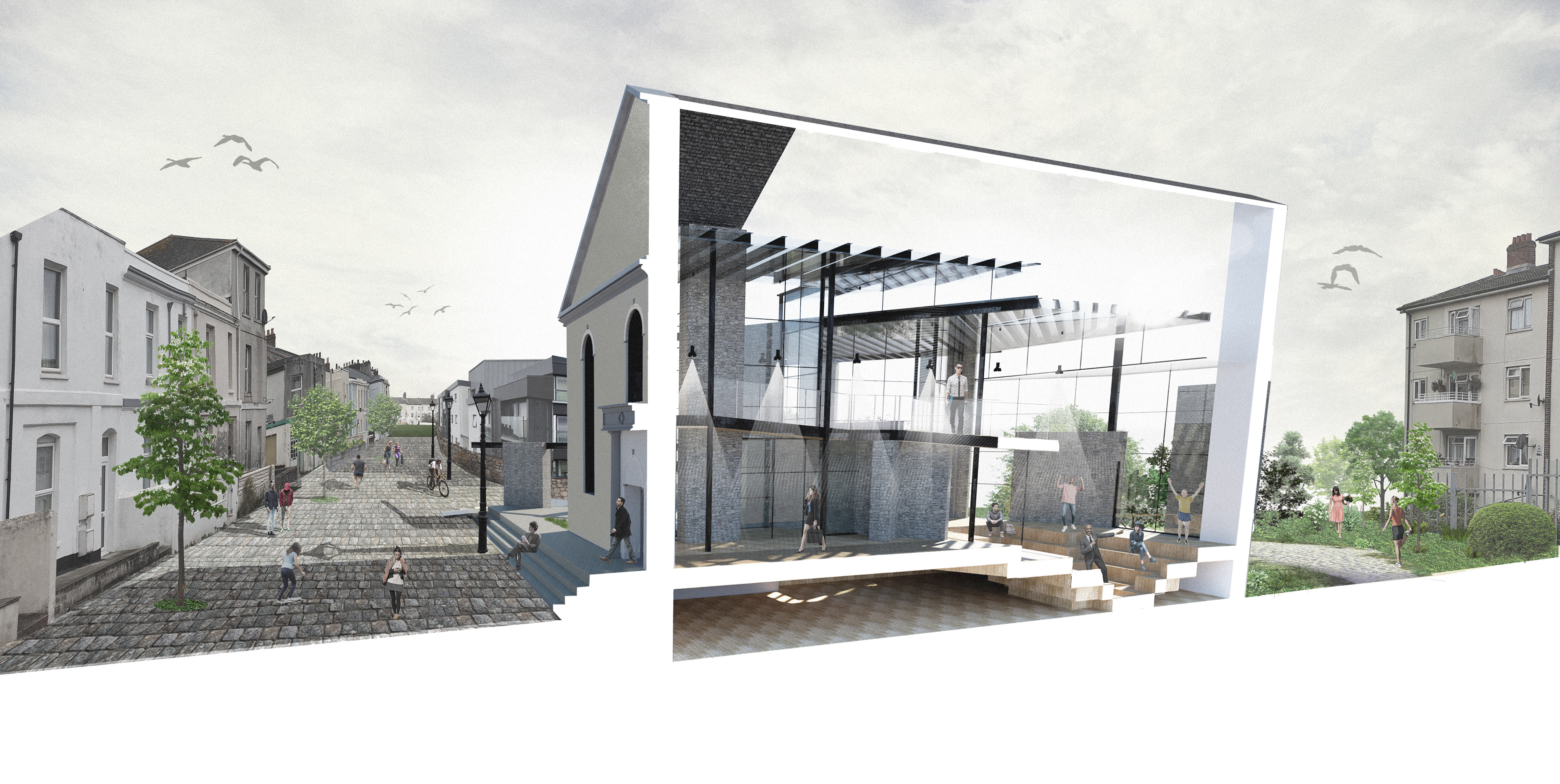
TRANSPARENCY - Ensuring the building remains at its core a public building, open no matter what the function, encouraging people to use the space for non political purposes; inviting feelings of trust and ownership.
INTER DETERMINACY Not predicting the future allowing my design to be dynamic and evolve so it itself can adapt to its ever changing context. Insuring that the building can engage with the problems of the present and remain relevant.


an indeterminant future.
undefined space and dynamic ownership
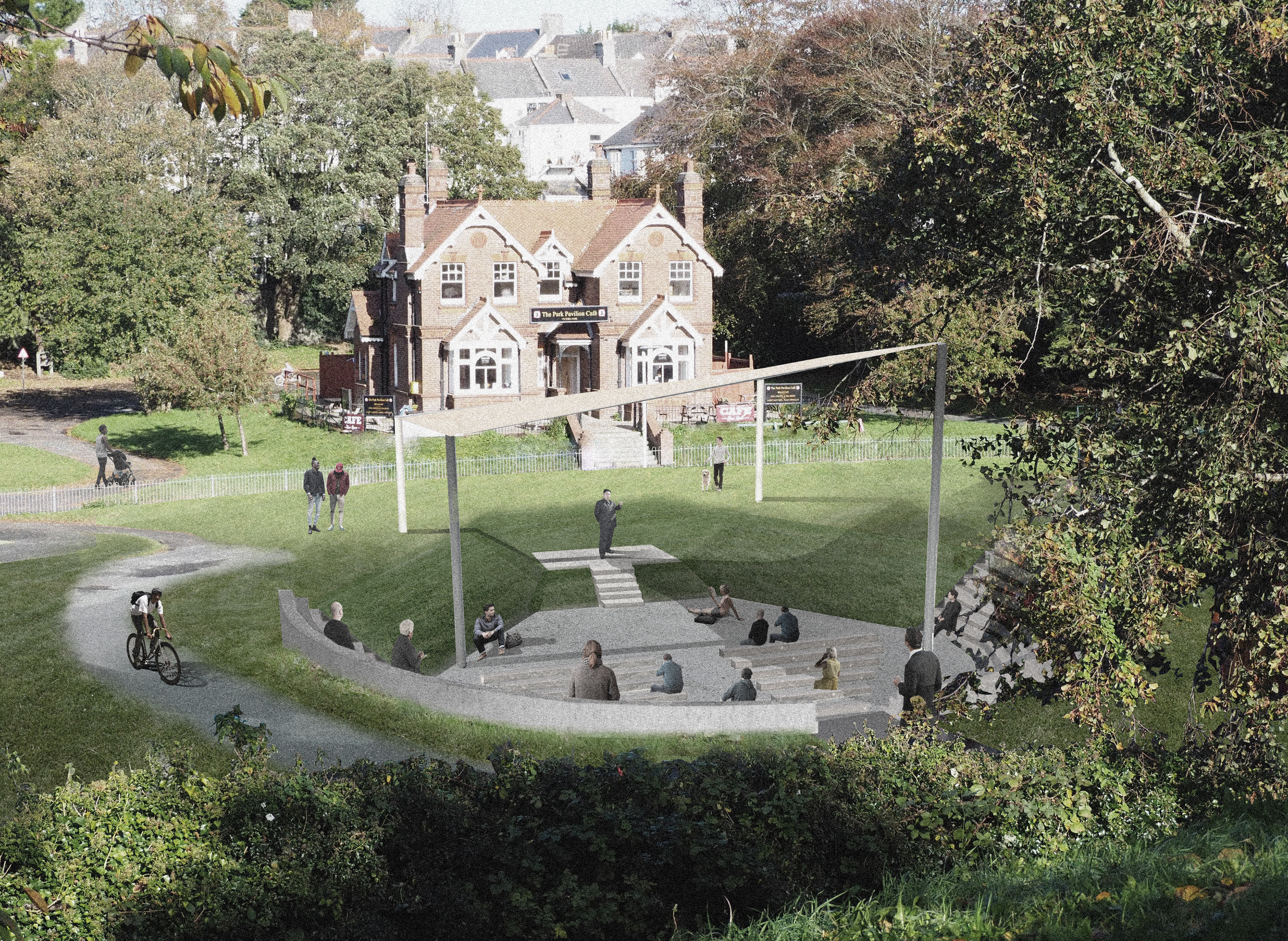
To provide a form of architecture that is dynamic, I proposed a system of elevating 500mm by 500mm blocks, that can be configured into a number of different layouts, depending on the desired activity. This provides the Open Forum with the capability to adapt to the needs of the community.
To create a successful political project, that isn’t deemed redundant in years to come, the building and idea must be able to evolve with the time, and show levels of inter determinacy. This can be in forms of physical adaptations, but also maintaining a level of transparency and staying undefined to an extent. Transparency of the building and the system, comes in tandem with ownership; as the citizens of Stonehouse use the proposal for purposes other than just politics, the building becomes personal. Knocking down the intimidating facade of politics making it accessible to the everyday citizen.


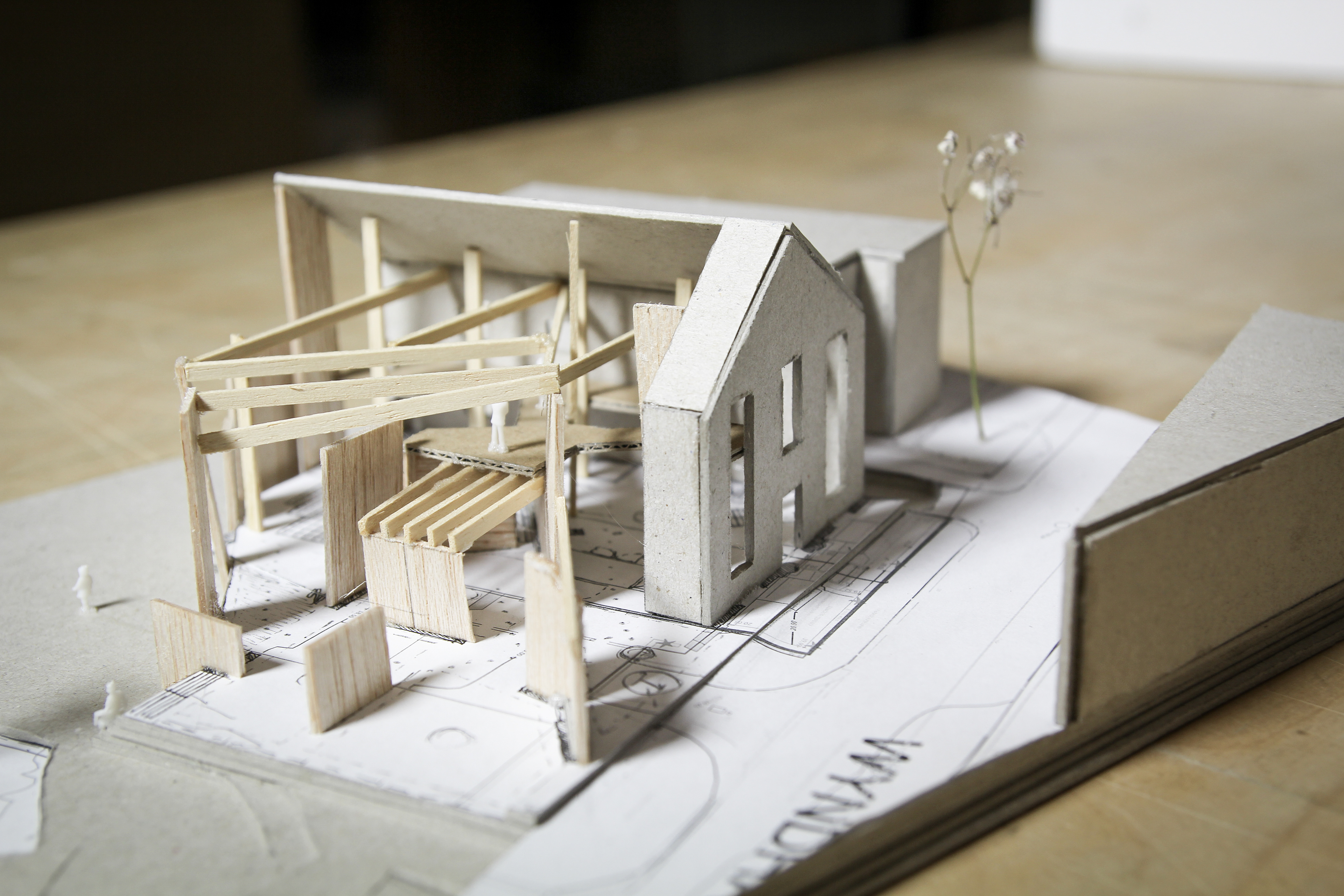

polluted heritage.
a palimpsestuous approach
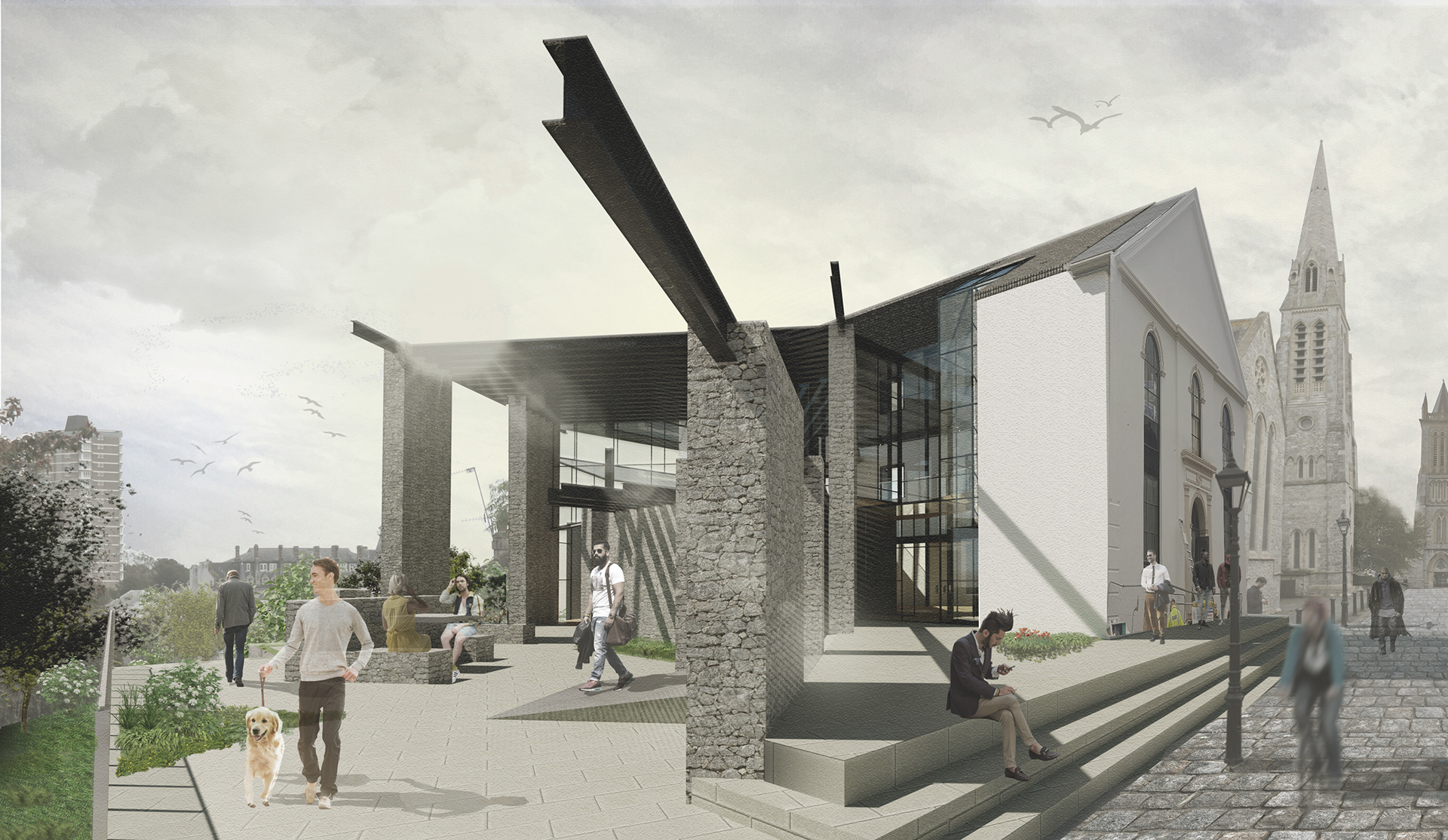
The Open Forum is situated within Wyndham Hall, an old Non-Conformist church hall; this location was perfect for my program as the very structure in which it sits carries religious connotations of the old governing body of the UK. As this is a grade two listed building my approach had to be sensitive and informed. My approach to heritage in this instance was palimpsestuous in its language. Since World War I the church hall had been neglected and abused by corporate firms, failed projects, and informal inhabitation, its heritage has subsequently been polluted. Through some analysis into other examples of non-conformist chapels, there is a clear pattern of symmetry across all façades. I chose the South and East façades to reassemble based on the previous scars of change, and these façades offered nothing in regards to transparency.


