TYPE: Masters Final Thesis Design Project
LOCATION: Devonport Leat, Devon, England
DATE: 26th September 2024 - 12th June 2025
METHODOLOGY:
- Constructed Analysis
- Film
- Photography
- Systematic Data Collection
- Metalwork
- Iterative Design Development
EQUIPMENT & SOFTWARE:
- Rhino 8
- Blender
- Canon R6
- Switchbot Hygrometer
- DJI Mini 4K
- Adobe After Effects
Routyansow focuses on the manipulation of water infrastructure present on Dartmoor National Park, forcing this previously damaging creation to work for nature with equal vigour as it does for humans, without impeding its existing functionality. By providing a fully kinetic, and completely passive structure that follows the course of the Devonport Leat, using devices to syphon moisture from flowing water, this moving enclosure captures this increase in humidity, to gradually cultivate sphagnum moss far faster than the natural rate, with the intention to kickstart the formation of new peat bogs along this man-made water course.
Dartmoor is a landscape comprised of many forms of natural and unnatural environmental conditions, ranging from temporal rainforests, harsh moorland and farmland; these and the rest all revolve around the use, manipulation or the control of water. Water has been the primary actor within Dartmoor National Park long before human influence, but its since the 1800s water has been collected, directed and dispersed all for the benefit of our farmland and urban environments.

the site.
TYPOLOGIES OF WATER INFRASTRCUTURE
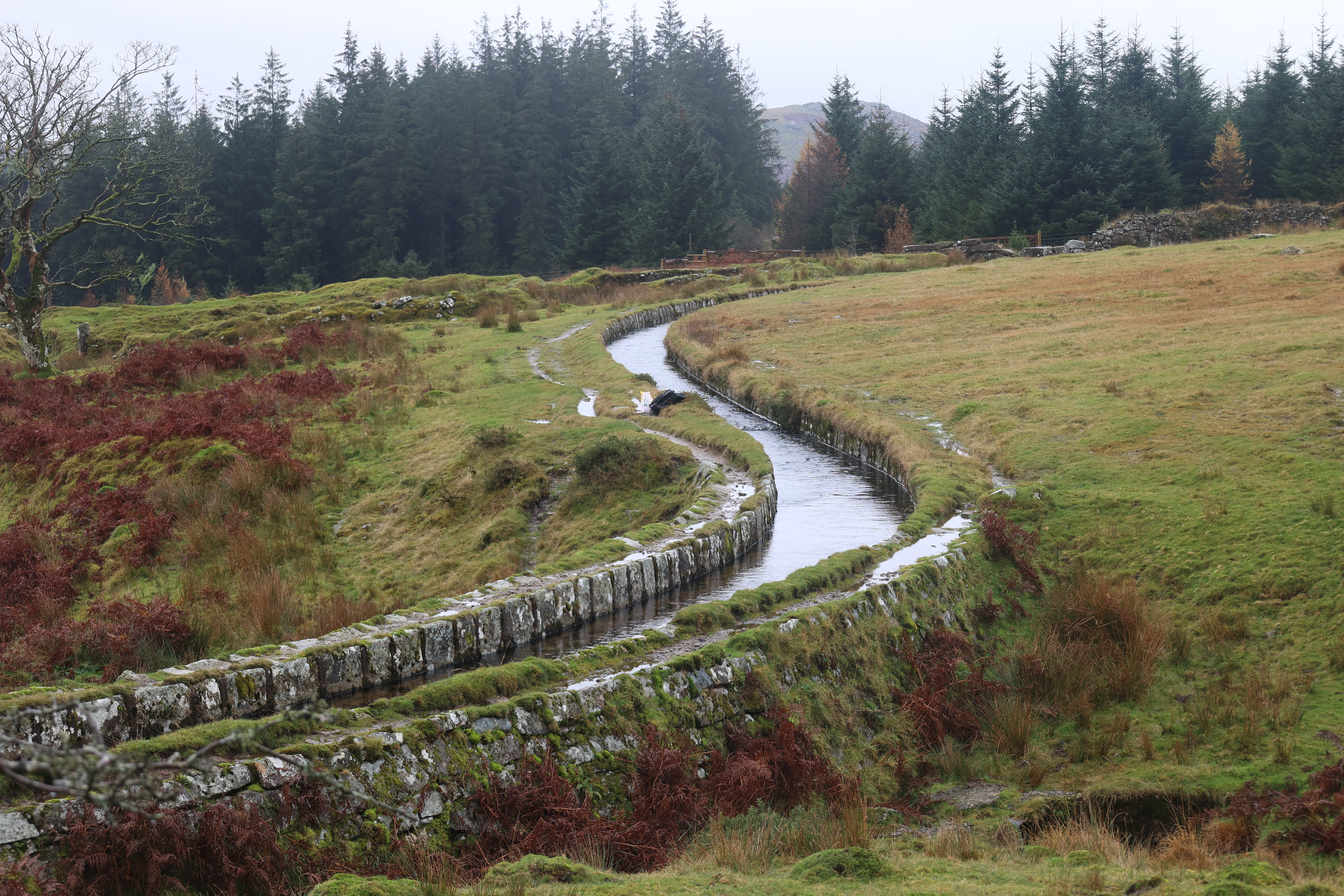
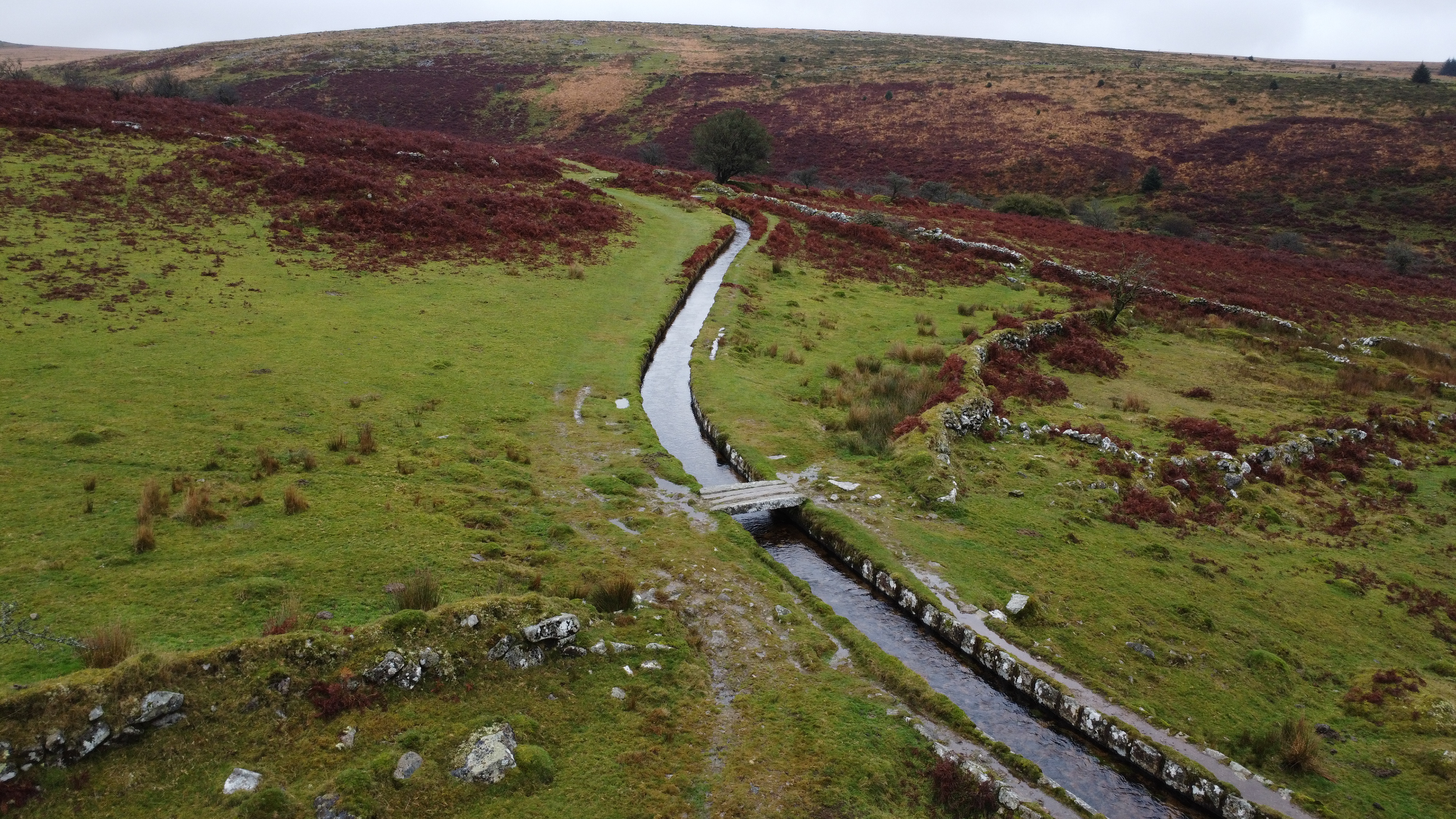
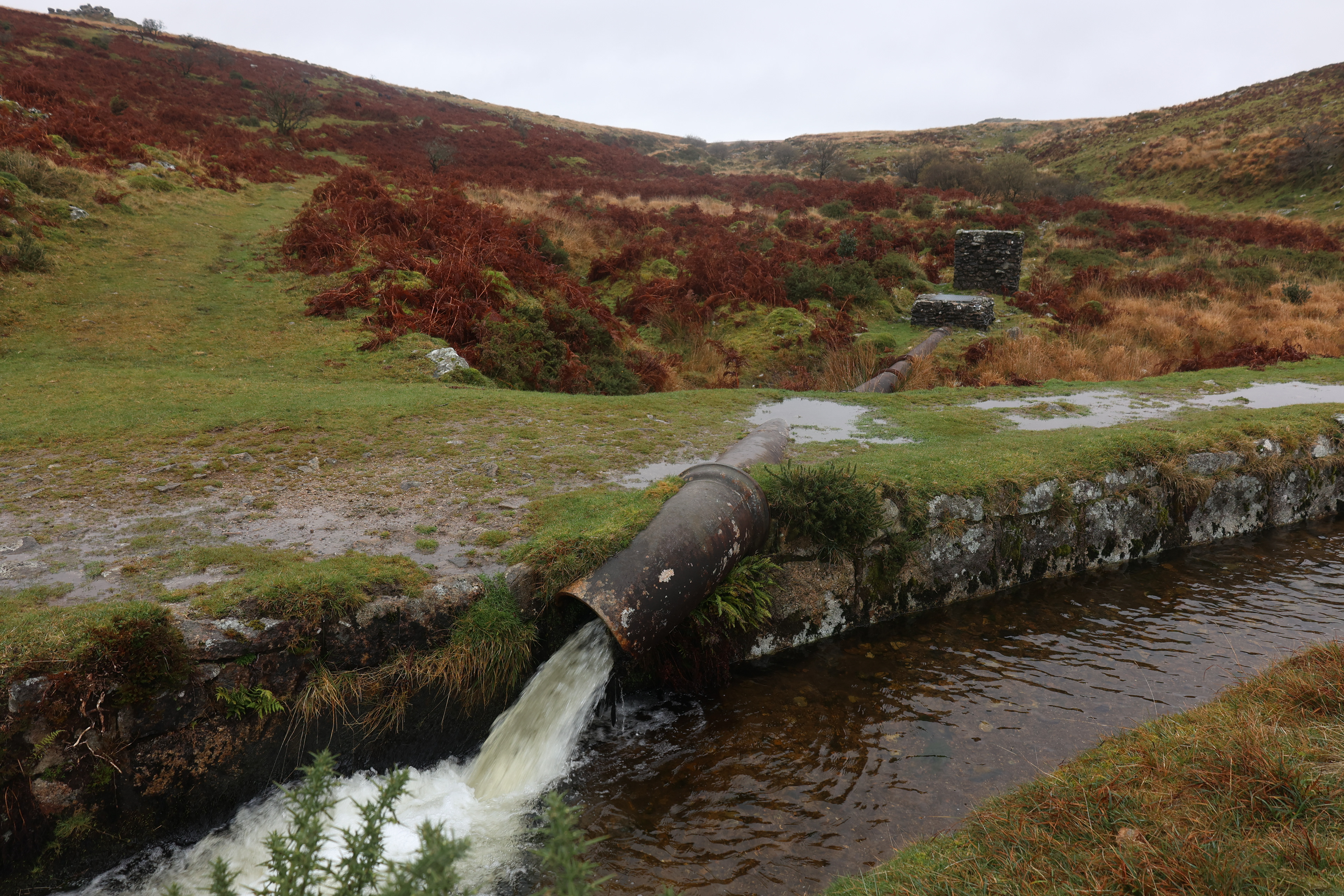
A leat is one of these infrastructure, a man-made channel for the collection and distribution of water. The Devonport Leat is the largest, constructed in the late 18th century, it was approximately 45km long when fully operational. It was built to transport fresh water from Dartmoor to the expanding naval dockyards in Devonport, Plymouth. The leat followed a carefully designed route, using the natural contours of the landscape to maintain a consistent gradient. Now reduced, the leat only leads into Burrator Reservoir, which contains the majority of the drinking water for Plymouth.
To begin to understand and investigate water infrastructure, I first needed to think about, what is it doing differently to its natural predecessor? Water infrastructure, generally speaking is forcing water to do something that it wouldn’t otherwise naturally do, in relation to the geography of that place.


the first prototype.
ITERATION ONE
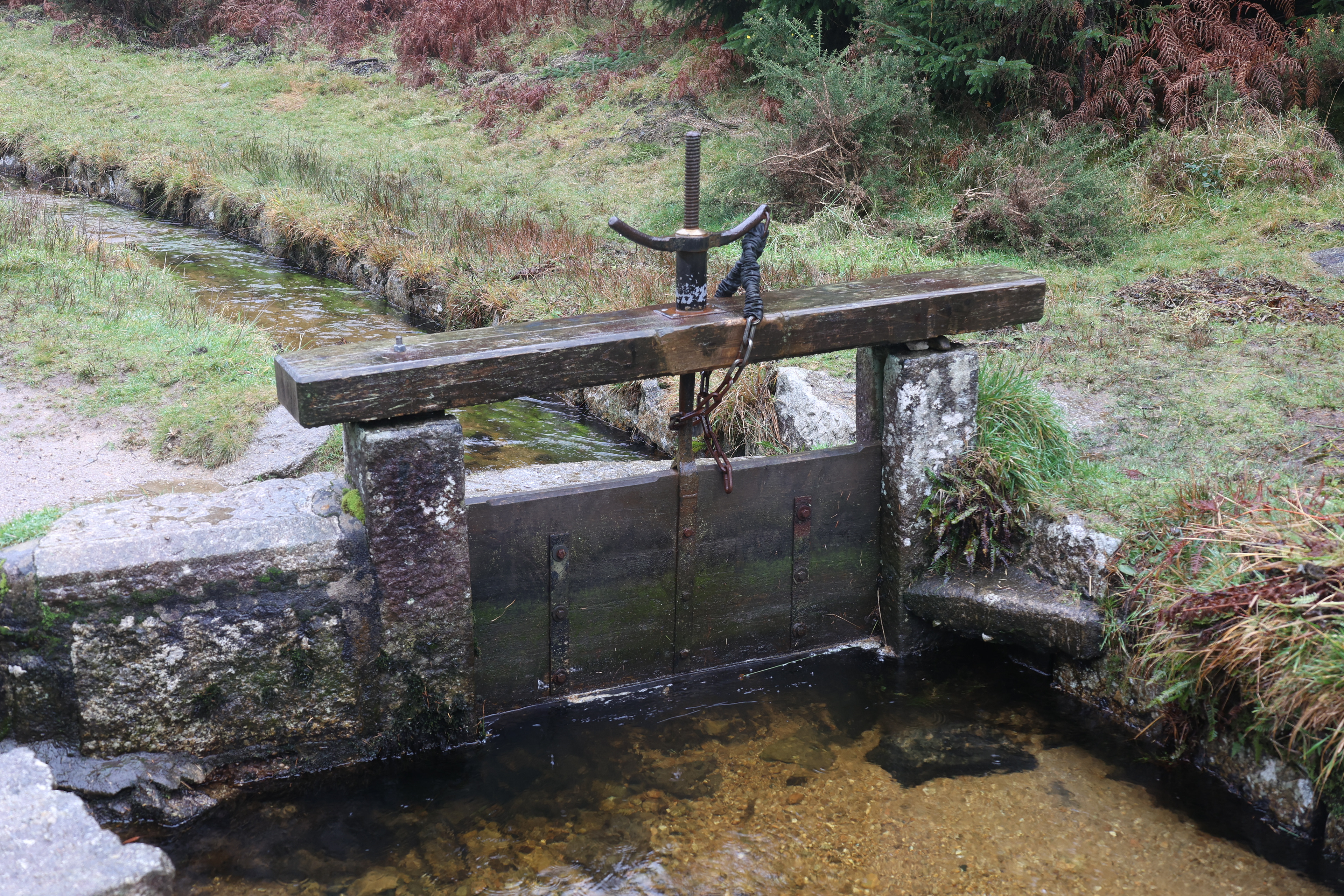
An object that can control of the rate of flow/ turbulence of water, is an object that can influence the rate of evaporation, and thus control the humidity of the immediate area. I intend to use this to practically engage with some of the environmental issues facing Dartmoor, as they mostly always relate back to moisture. The site I chose to test, came up in my observations and in my results as a place of interest. This site is the only location along the 2.6km where the leat is narrower than 1.8m. This is a piece of infrastructure used by South-west water to measure the volume of water travelling through the leat.
I situated the object here because of its potential to either work for or against this existing devise that already affects the velocity of the water. The most successful iterations were those that used symmetry to channel the water in very specific ways, increasing the pressure of the flow, by limiting the flow to a few points. Although the most interesting was the angled parallel blades, that had the most turbulent affect, creating multiple whirlpools like conditions, that captured the testing ball, leading to the idea that it caught the water in this circulatory motion instead of letting it flow.

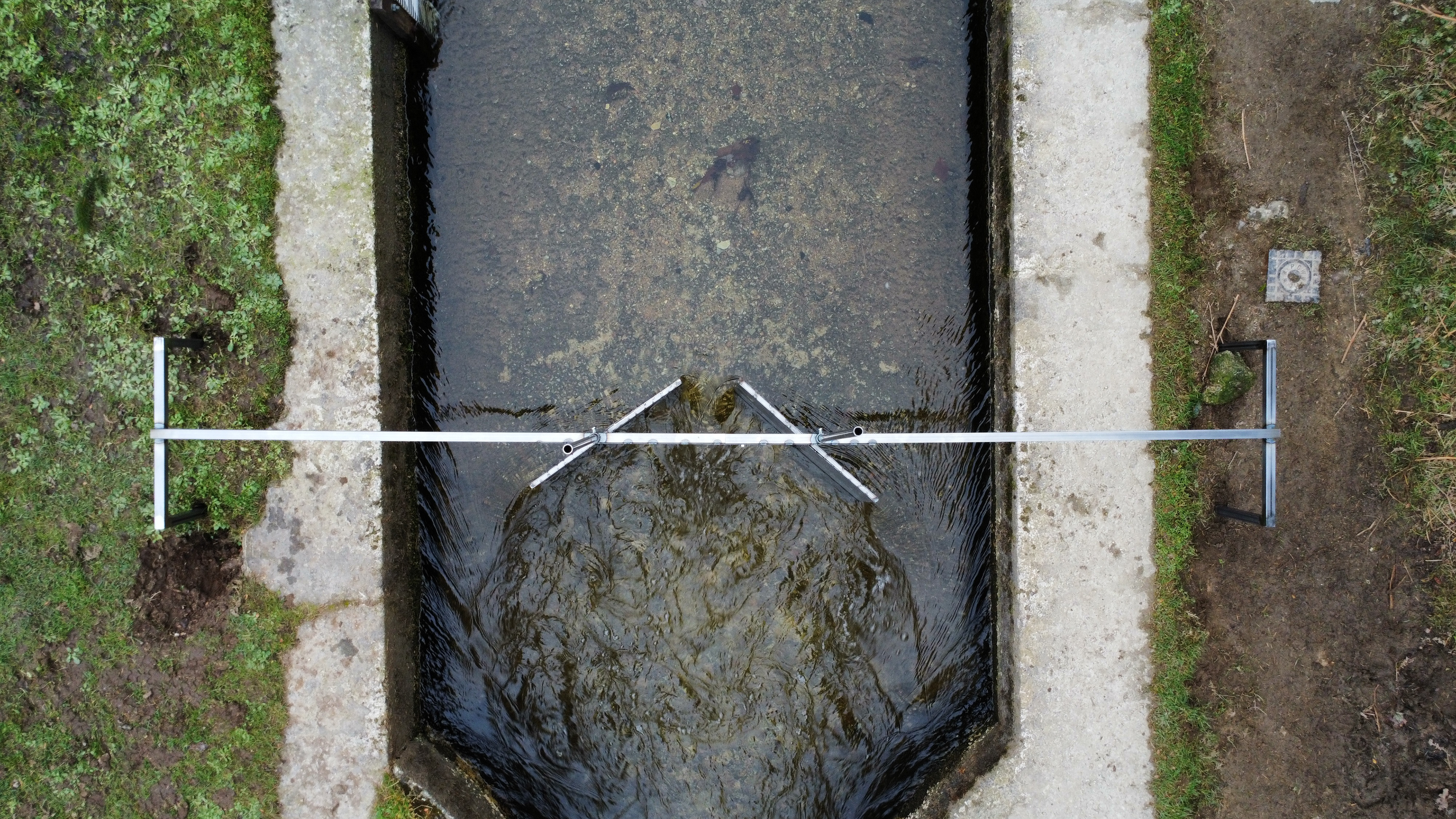
new site, new tool.
INDUCING AN INCREASE IN HUMIDITY
Moving on from the last test, I proceeded to do further research into the mechanics of water and I learnt that, I only needed to impact the surface of the water to increase evaporation. This led onto the development of more light weight and sophisticated iterations of the tool. The first being the steel curved blades aimed at emulating the whirlpool effect from the last experiment, but far greater. This device worked well, both visually and quantitatively, as I recorded a 2-3% increase in humidity above the waters surface.


the louvres.
INDUCING AN INCREASE IN HUMIDITY
The second iteration of this tool is the louvred panel with adjustable blades, designed to laterally cut through the water and can be set into many different configurations to test. The timber blades had been sharpened to cut through the water with increased efficiency. The two most effective louvre configurations was the angled 450 lourves (left column of photos), and the flat 900 (right column of photos) Both versions worked well visually and quantitatively recording a 2-3% increase in humidity.
the turbine.
HYDROELECTRIC POTENTIAL
The third iteration that I wanted to test, was the steel turbine. From the moment I starting working with water flow and turbulence, a turbine seemed like an obvious option to test, with its connection to hydroelectric potential, but it was its ability to create turbulence which was my priority. Unfortunately the weather conditions on the day made the results inconclusive, but visually it didn’t work as well as the previous two designs with far less bubbles on the surface of the water.

the enclosure.
DEVELOPING A PASSIVE KINETIC STRUCTURE
Global warming will have an effect on more than just local temperatures, a 2024 study from Plymouth university states that for highland areas over 300m above sea level, summer precipitation levels could decrease by 20% by 2050. If this happens it will have an exponential knock on affect to mosses and lichen, travelling all the way up the food chain.
The question is how can I use my developed device to have an impact on retaining or increasing moisture on Dartmoor through the summer months and into the future? An important element within Dartmoor’s water management system is peat/ peatland, a very unique landscape that can hold vast amounts of water all year round, as well as being a huge carbon store and a crucial ecosystem. Peat is in decline mostly due being drained for farmland, on top of being overgrazed and extracted as a fuel. Due to the length of time peatland takes to form (around 1mm every year) its very difficult to reform, as peat only forms underneath a healthy bed of sphagnum moss that regulates moisture and decomposition of matter. Spahgnum moss needs over 90% humidity to grow at its optimum rate, so it through this that my research and development finds its function.
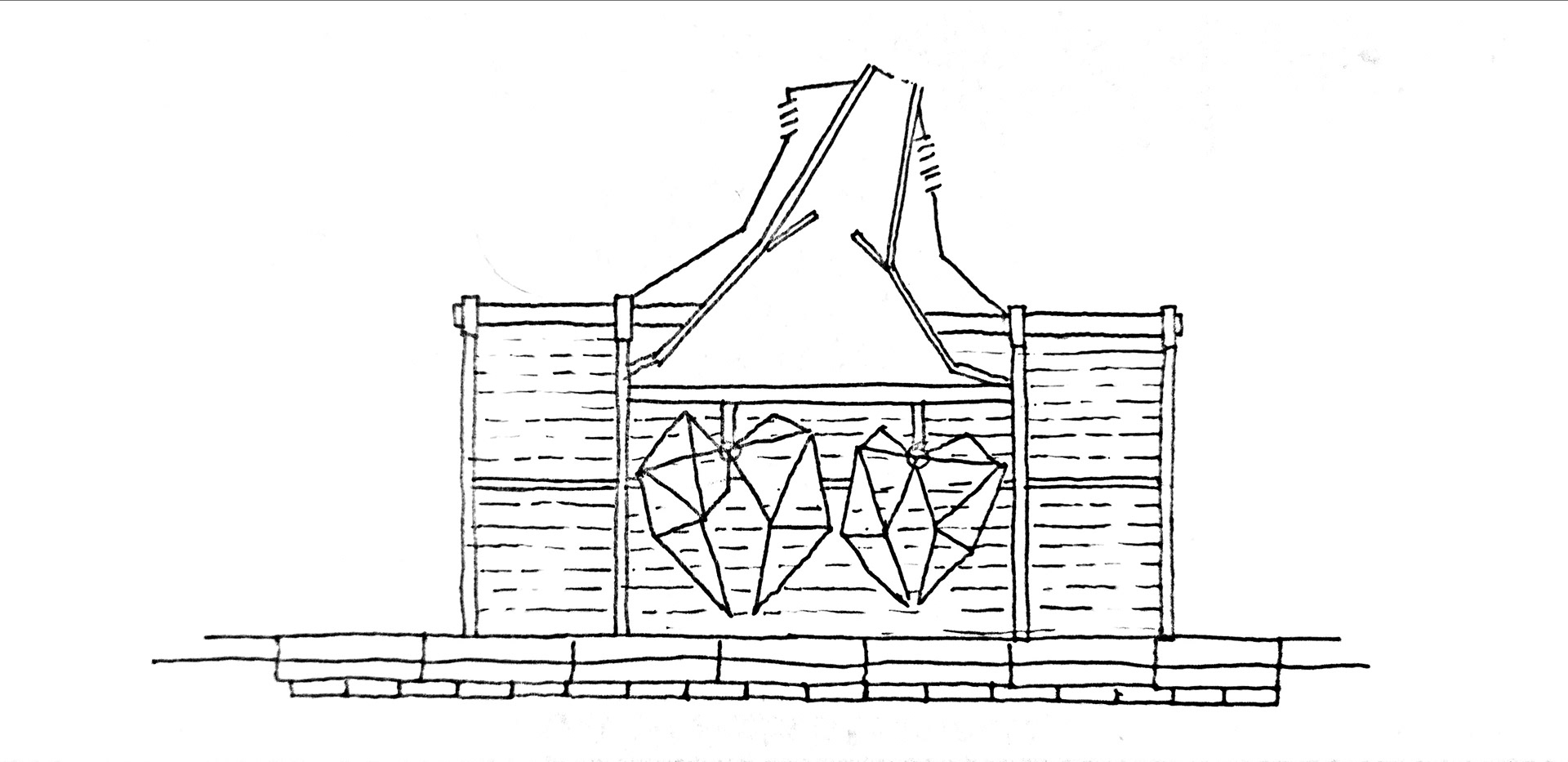
For the enclosure to have the desired impact on the cultivation of peatland across the course of the leat it must be able to move. I looked into many different approaches of kinetic structures, but the primary problem I had was the topography, not only is there a constant incline but the landscape either side of the leat fluctuates by approximately 5m, so the structure had to be able to adapt and account for this change if it was going to move down the whole course.
I experimented with many different forms of movement, such as a manual human relocation, a folding solution, or a fixed-move-fixed solution, but the one that was most appropriate was to make the enclosure constantly moving.
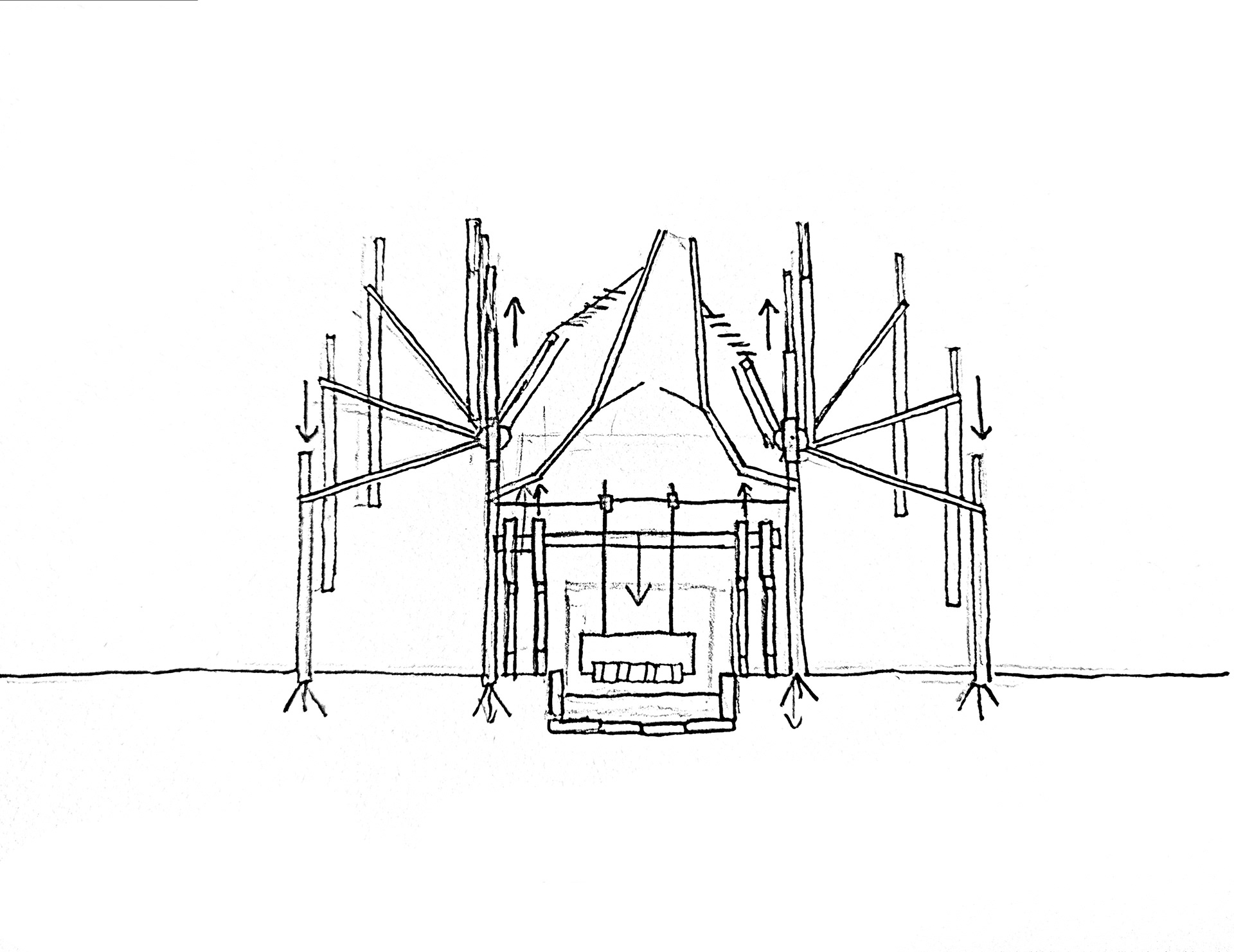
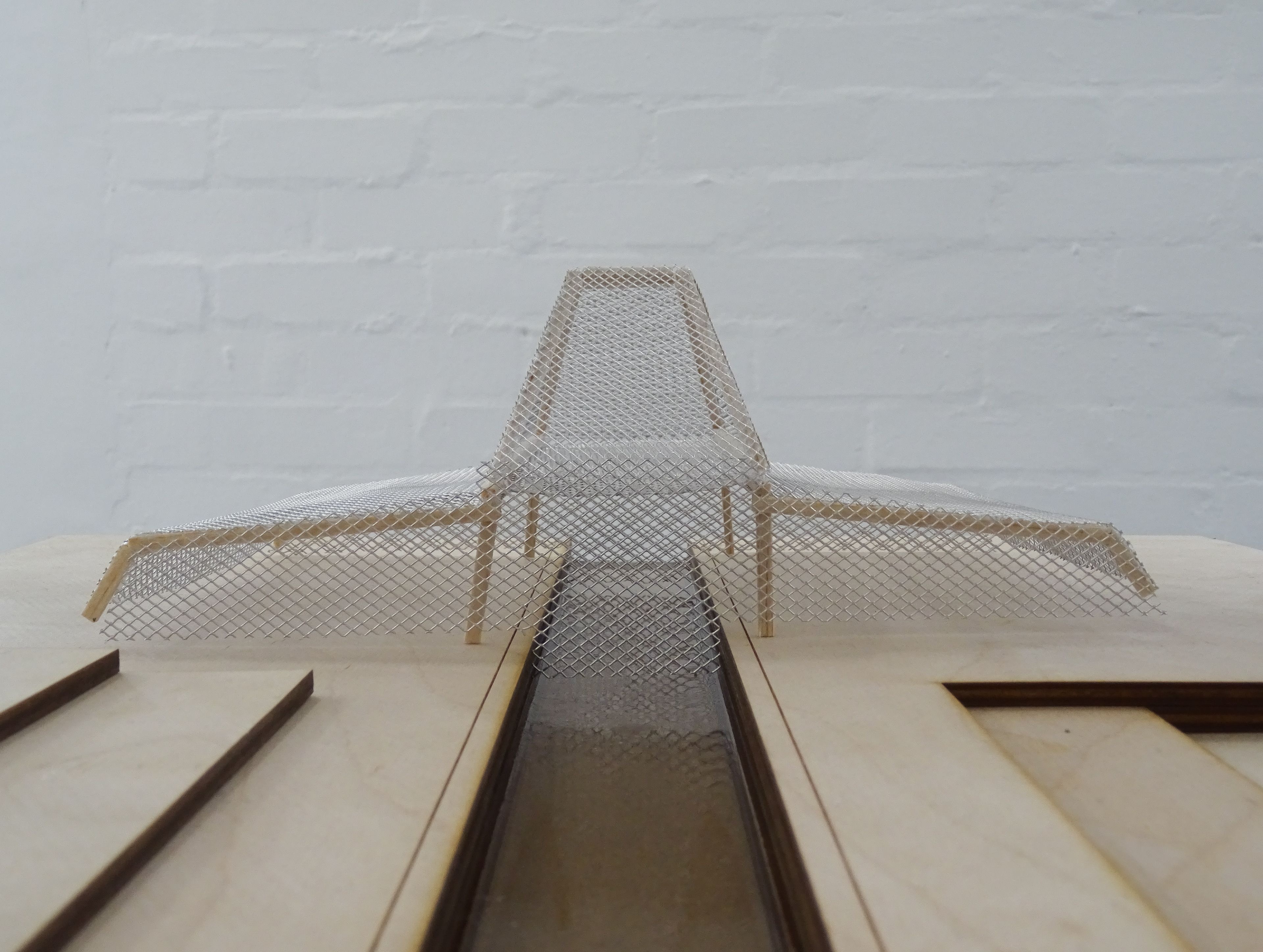
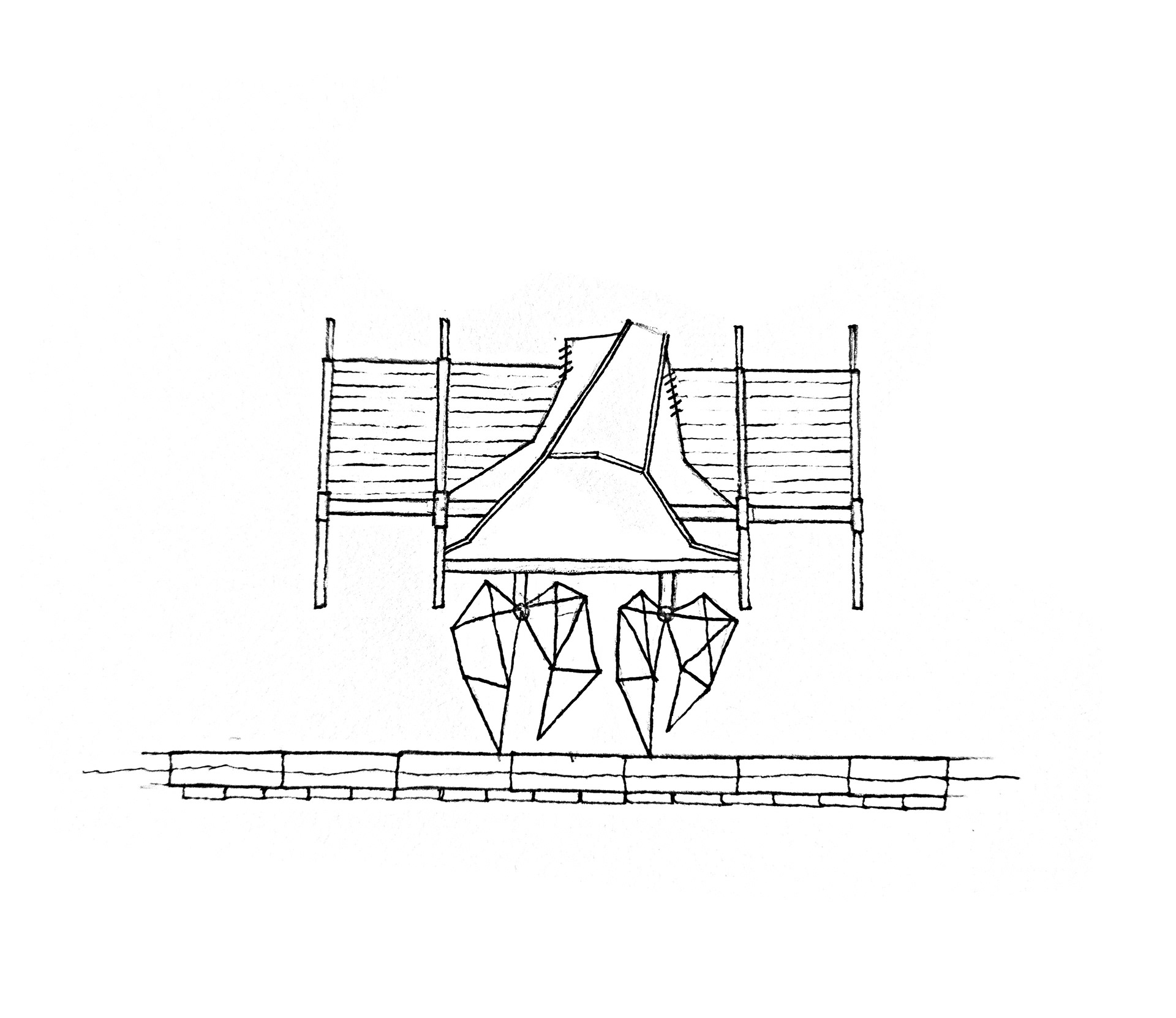





the model.
POWER, MOVEMENT & EFFICIENCY
Due to the enclosures constantly moving nature, this created a number of added design challenges. As sphgnum moss is slow to grow even in its most optimum conditions, the enclosure had to move very slowly over a very specific period of time (10m per year). How do I passively control its rate of movement? How does it change direction without a guidance system? How does it move without an external electricity connection? These were all answers that I found from the leat itself, either from harnessing the kinetic energy from the constant flowing water, by collecting, displacing and releasing the water over a period of time. I also used the banks of the leat as ‘rails’ to guide the crawler along its path.


the ground.
TRAVERSING TOPOGRAPHY
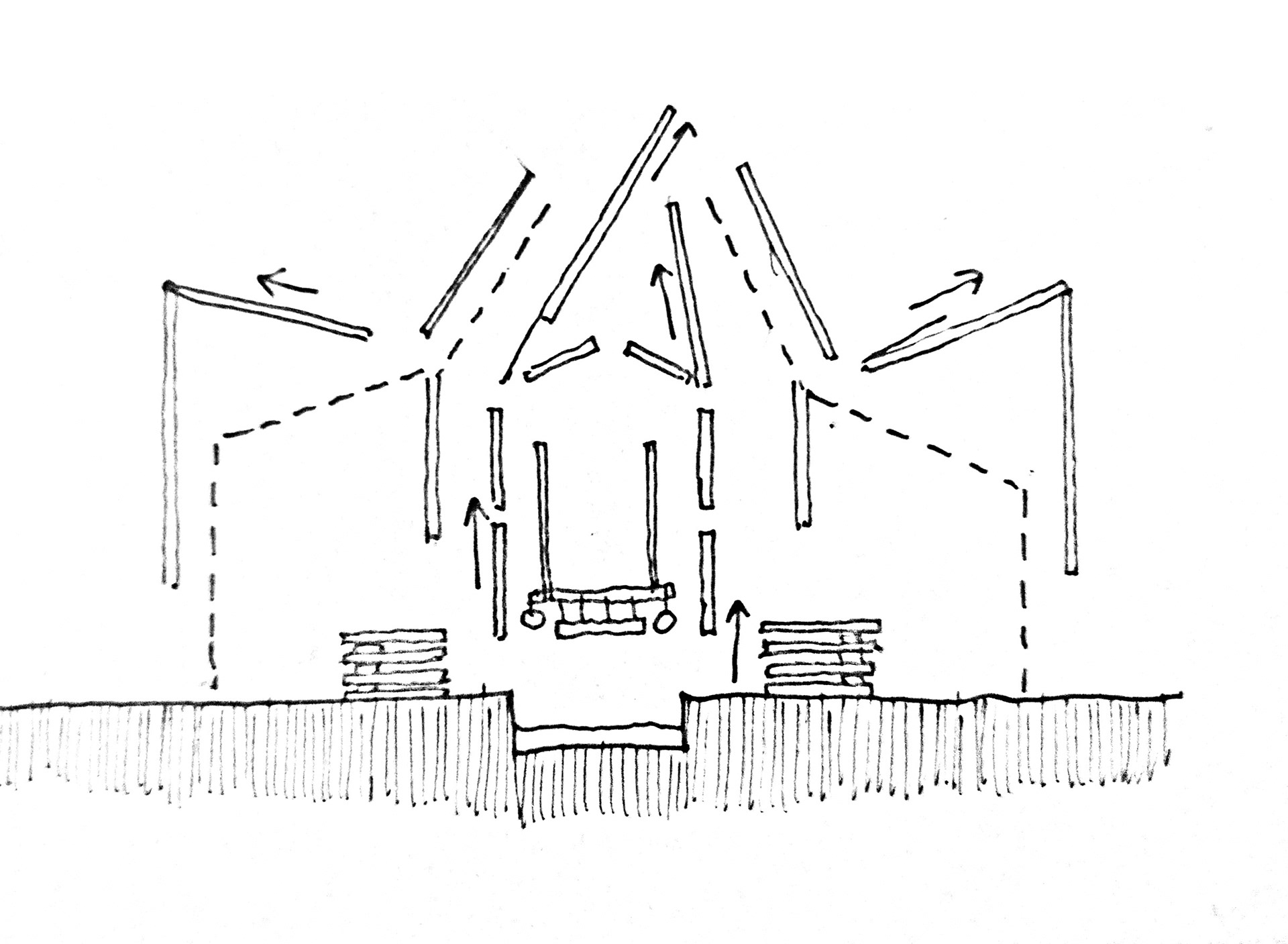
The crawler uses two different systems to adapt to the topography change, the first being the vertically moving inner wheel set, which provide structural stability, and to raise and lower depending on smaller topography change closer to the leat. The second being, the outer arm which has a far larger range of travel to account for the greater change in topography further away from the leat. Supported by a system of hydraulics and a clad with a clear and flexible TPU film. All these systems are to insure a sealed internal condition across all topographies that it will transverse.
The enclosure is passive and self-regulating, maintaining the correct climactic conditions for sphagnum moss to flourish, by using and controlling all of its surrounding natural phenomena, including rain, wind, sunlight and fog.
The enclosure splits the rising humid air forcing it into the areas of moss cultivation, but through system of strategically placed vents its able to flush this chamber to regulate the internal temperature. The crawler is designed to collect water and direct it down the spine to then be distributed evenly through the internal chamber insuring that the groundwater is enough to support the moss.


the scope.
FUTURE OF ENVIRONMENTAL CHANGE ON DARTMOOR
Over the course of 260 years, the enclosure would have gradually moved down the course of the leat, leaving behind new areas of peatland in its wake, all now spreading autonomously. Within this timeframe, Dartmoor’s environment will be exposed to a range of extreme environmental change, ranging from wildfires and droughts in the summer, to flash floods and extreme weather conditions in the winter.
If Dartmoor’s peatlands completely dry out in the summer months, the peat oxidises and would turn from a carbon store to a carbon source releasing 10 million tonnes of carbon. All of the discovered methods of peat regeneration are mostly large-scale landscape interventions that make permanent changes to the topography of the environment, with the most reoccurring approach being the blocking of drainage ditches. My proposal doesn’t make any permanent landscape alterations to enable peat creation, and due to the nature of the leat it cannot be blocked. My proposal instead of fighting the leat, it works with it, it manipulates this found condition, using the water without permanently taking it from the leat, borrowing it for its required function.

what is that strange structure?
LEVELS OF HUMAN ENGAGEMENT
This proposal ties together old local customs though the reinstatement of the Leatsman role within the community, a person or people who would be tasked to occasionally check on my creeping structure to ensure its still in working order and still creeping its way up the leat. Dartmoor is also a very popular area and frequently visited by a wide variety of people, both locals, tourists, alike, this proposal would act as a beacon for the awareness of peatland importance, and how people and help and engage with saving this ecologically crucial environment. It provides an educational element, whether that is through direct engagement through the raising of curiosity, the highlighting of the challenges and problems that face peatlands, or just by returning to Dartmoor and realising that the strange structure from last time is now in a completely new location.


