TYPE: 1st Yr Masters Design Project
LOCATION: South Kensington, London & Katherine, Australia
DATE: 26th September 2023 - 29th June 2024
METHODOLOGY:
- Territory Mapping
- Physical Modelling
- Parafiction
- Film
- Photography
EQUIPMENT & SOFTWARE:
- Adobe Creative Suite
- Blender
- Sketchup
- Lasercutter
- Woodwork
The project aims to highlight and challenge the continued connection between London and its former colonies by exposing the corporate extraction and economic flow that is still exchanged from dispossessed indigenous land, through British owned corporations and then into London as investments. Companies such as Rio Tinto, De Beers Group, the aaco, and Unilever, still directly use colonial infrastructure to accumulate capital; and it’s that very same capital that is invested into London based development projects or institutions like Tate Modern, the Natural History Museum, and the Tottenham Hotspur Stadium to name a few. This infrastructure can come in the form of land owned, legislation or partnerships but no matter in what form, all roads lead to London.


the purpose.
A COLONIAL REBRANDING
The project focuses on translocality and highlighting this colonial ‘re-branding’ by exposing these portals that exist across temporalities, between London and its empire and between the past and the present.
The chosen portal is between the UK and Australia, the Northern Territory and South Kensington but more specifically between the Ranger Uranium Mine and the Natural History Museum. British mining giant Rio Tinto are the current owners of ranger uranium mine in the northern territory and one of the largest investors in the Natural History Museum. as an investor into the ‘history of the earth section’ reveals the unfathomable irony as on the other side of the portal they have gone out of their way to destroy history and culture purely for economic gain.I will be proposing two pieces of architecture , one at each end of the portal, one in the natural history museum and one in the ranger uranium mine. they will be tied together through their duality and shared economic flow, but are drastically different with contrasting approaches to infrastructure, site and value; reflecting the ideologies of their subsequent users. The project has been rife with parallels since its inception with contrasts and contradictions and the occasional similarities. By proposing a pair of installations, it allows me to further explore this portal, the relationship between both sides of this economic model and the all of the actors involved. By continuing to explore the projects in both locations it allows me to challenge the contrasting ideologies between the stakeholders and their approaches to land, economics and values.
two mines, two countries, two contrasting approaches

follow the money.
COLONIAL CORPORATE CONNECTIONS
The project began in London, and quickly travelled overseas, as I followed the money being invested into development projects across the capital. It took me to countries that have a dark past with the UK. Countries that in the most part, are still being exploited, now longer by a ‘nation’ but by British owned corporations.
Through mapping land ownership in the Northern Territory, I was always going to come across Rio Tinto, and specifically the Ranger Uranium Mine. I wanted to expose Rio Tinto’s colonial connections and it didn’t take long to find the link between dispossessed indigenous communities and London.

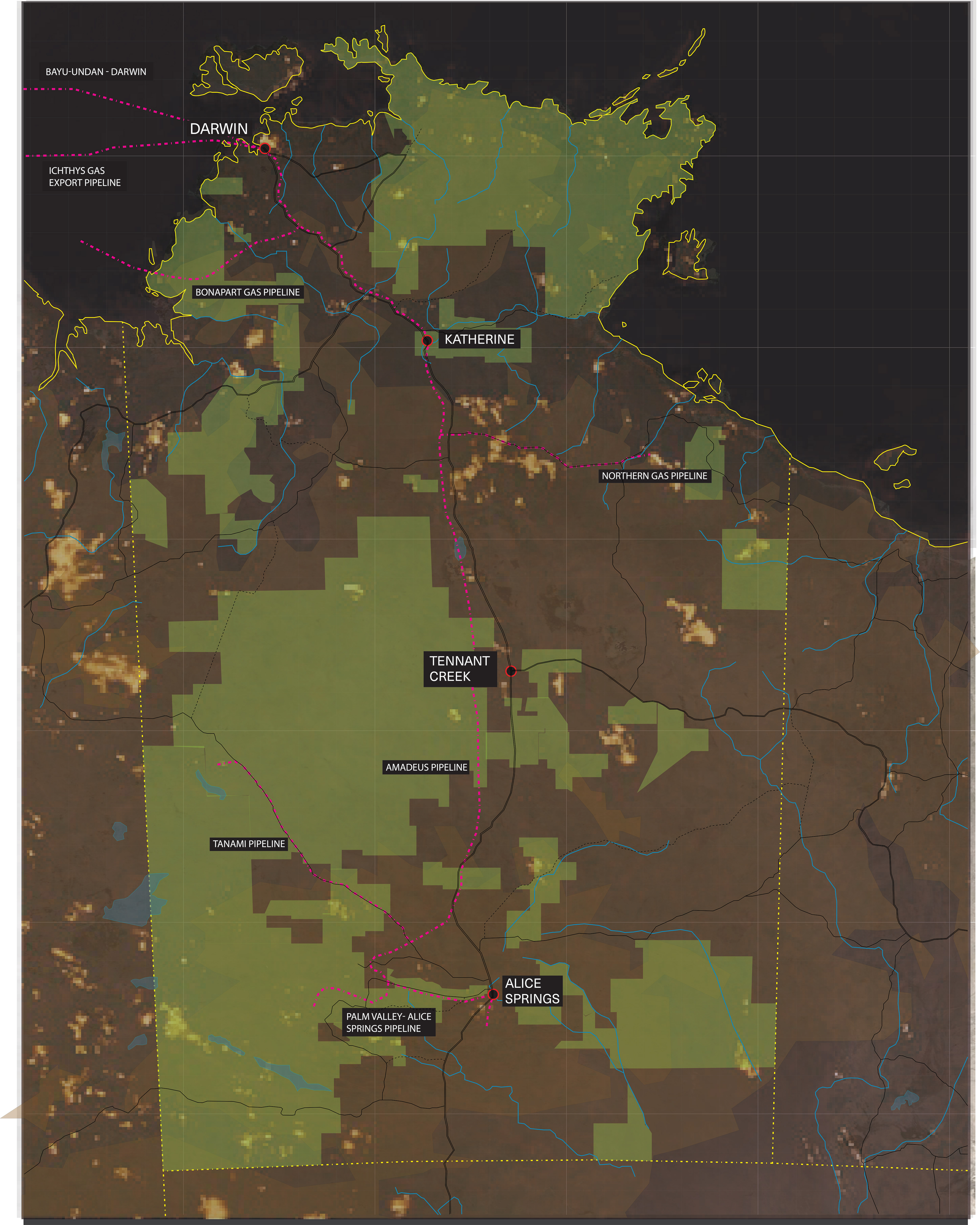


the discovery of hydarite.
A PARAFICTIONAL ELEMENT
To situate the two sides of the project, i used parafiction as a methodology. Parafiction was a successful tool as it allowed me to situate the project within a grey area of fact or fiction, being able to emphasise and play with reality whilst keeping the project grounding; always hoping the question gets asked. Is this real? Parafiction is a very interesting methodology to use as it really allows a project to test real life boundaries and issues, without being held back by real world pragmatics, but still lies in a realm tethered to the world. Parafiction open us an un-bias research approach, because when it is engaged with honestly it acts as a sandbox for potential to uncover very interesting things especially when people think that they are discussing reality.
“Hydeuim -237 is very similar in uranium in its qualities and aspects but it has been found to be far more efficient. Since its discovery back in 2021, hydarite has taken the world of nuclear power by storm. with a 20% higher proton and neutron count, hydarite is now the worlds most efficient naturally occurring fuel. Its market value has increased by 143% and it now trades over the floor at 213 USD per gram.”


the mine of economic history.
THE LONDON SIDE OF THE PORTAL
In this parafiction, I became Rio Tinto, converting the Natural History Museum into a ‘Hydarite’ mine, taking over its Gothic halls and grand spaces, filling them with parasitic machinery, conveyor belts and mine shafts. Discarding all artefacts that reside on the surface, priority is now given to the high value that now sits beneath the ground. Consisting of a sophisticated network of infrastructure, both above and below the ground, the Natural History Museum has now become a organism of efficiency and for the extraction of capital.
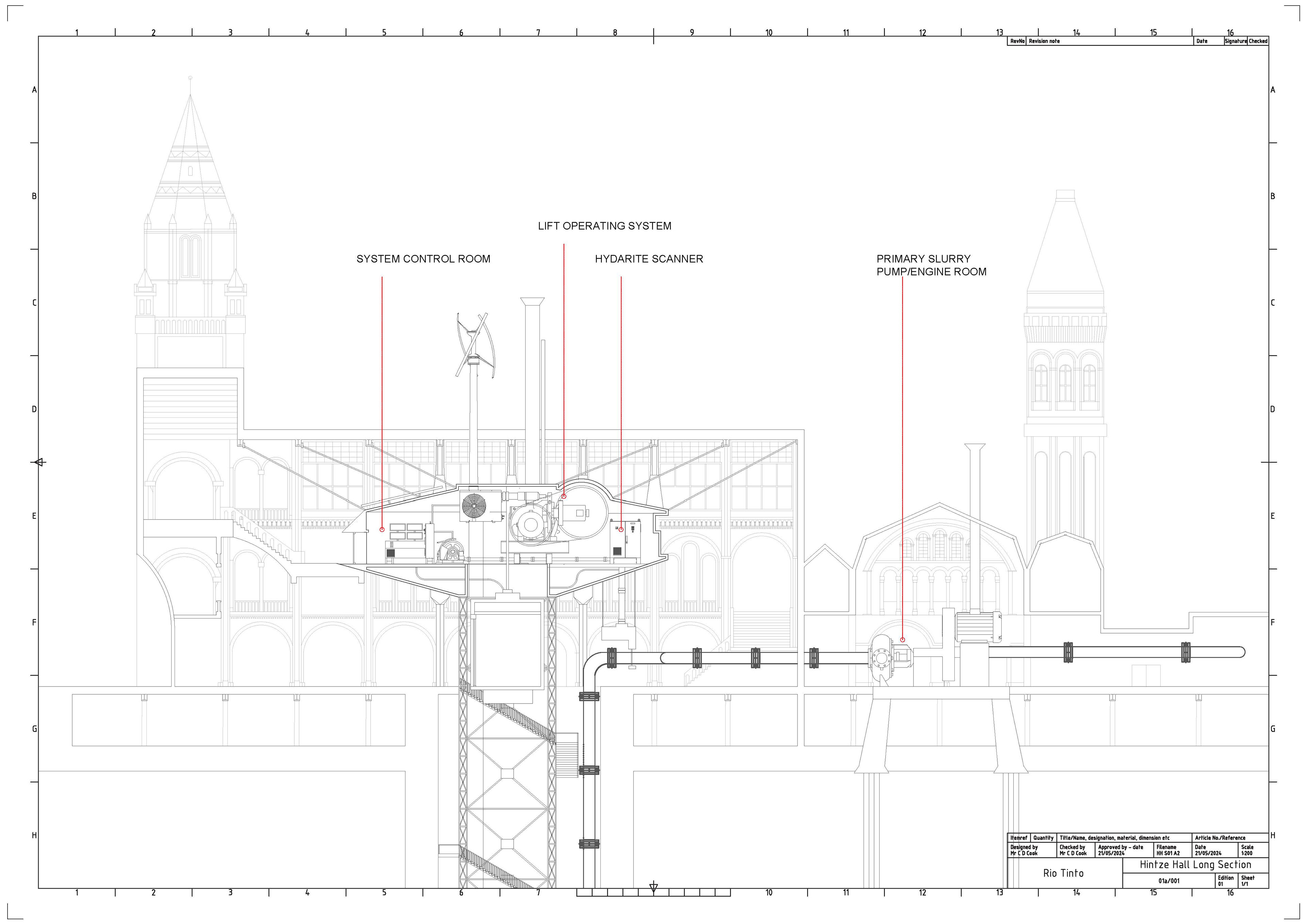
a parasitic plan.
DUAL PROCESS LOOP
The first stage of refining the hydarite slurry is the acid chambers. By adapting the existing infrastructure within the museum the acid chambers can be two storeys tall further increasing the efficiency of the process.
The plan consists of two hydarite production loops, both beginning at the Hintze Hall, as each stage of production bleeds into the subsequent rooms with complete disregard for heritage and history.
Now is the time for efficiency and high production yields so mining machinery has to evolve, it must get bigger, more efficient and with that these Goliath earth moving machines are themselves architectural, becoming parasitic in their invasion of a space.


corporate promotion.
WHAT IS IMPORTANT TO THE FICTIONAL STAKEHOLDERS
These are screen captures from an animated Blender fly through of this conversion. Following the order of processing, the animation flies through both mine shafts showing the infrastructure beneath the ground. above the surface it shows the sequence of spaces converted to suit the hydarite (uranium) processing sequence, from chemical processing and storage.
the hintze hall.
THE ORGANISM MAINFRAMEThe Hintze Hall is the primary space for this conversion, as it is the first point where the hydarite slurry gets pumped up to the surface. The hintze hall is the conversion point for many journeys within this process, rio tinto have obviously seen this gesture when designing the internal structure with the aim to create a mainframe/ central nervous system type space. this internal structure acts as the brain to the entire organism, this extensive system of arteries and capillaries all deeply rooted in the ground and the building all focused on extracting hydarite.
The machinery has become the architecture, whilst using the existing building as a host, acting as a leech off of the structure, using it as a catalyst for extraction. Consisting of a sophisticated network of infrastructure both above and below the surface, the Natural History Museum has now become an organism of efficiency and the extraction of capital.

kakadu center of (un)natural history.
THE AUSTRALIAN SIDE OF THE PORTAL
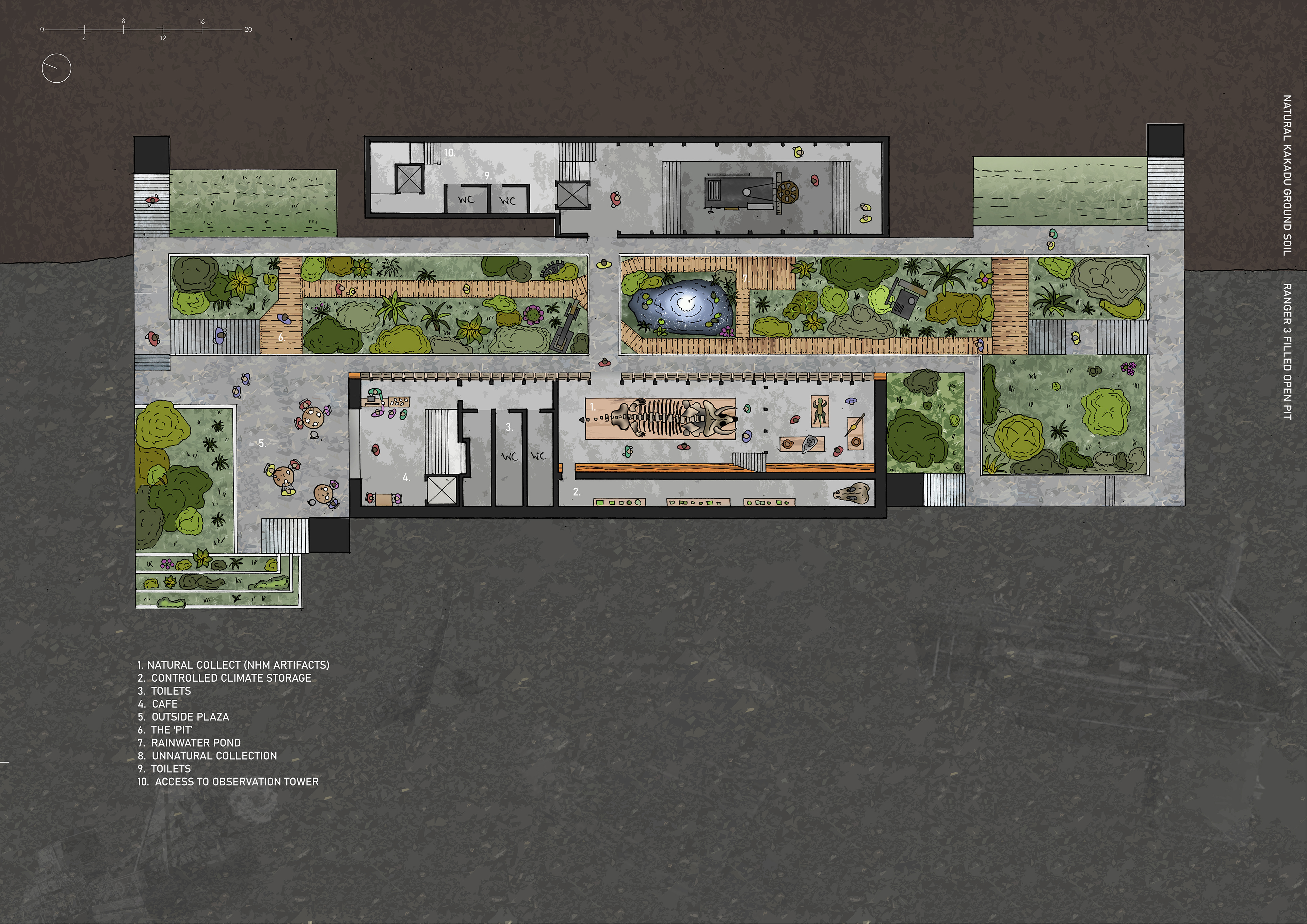
The other half of the project is situated in the decommissioned Ranger Uranium Mine site in the Northern Territory. I designed the Kakadu Center of (un)Natural History, as a hybrid museum of contrasting exhibits, all situated either side of the colonial time line. The proposal aims to tell the story of the Mirarr People, pre, and post colonialism, and to discuss the challenges faced now and into the future.
The proposal houses all of the disregarded Australian Artefacts from the Natural History Museum, but not just to maintain natural history, but it also aims to reverse the economic flow, using these artefacts to generate capital to be reinvested back into the park. The building is comprised of three distinct entities, the natural collection (on the left of the section), which houses all of the artefacts, it boasts an all natural material palette, and temperature controlled atrium space. All façades are internally facing due to the intense heat of the Northern Territory, they are all designed to be porous to both light and air, as well as come equipped with adjustable high level vents to expel any hot air.


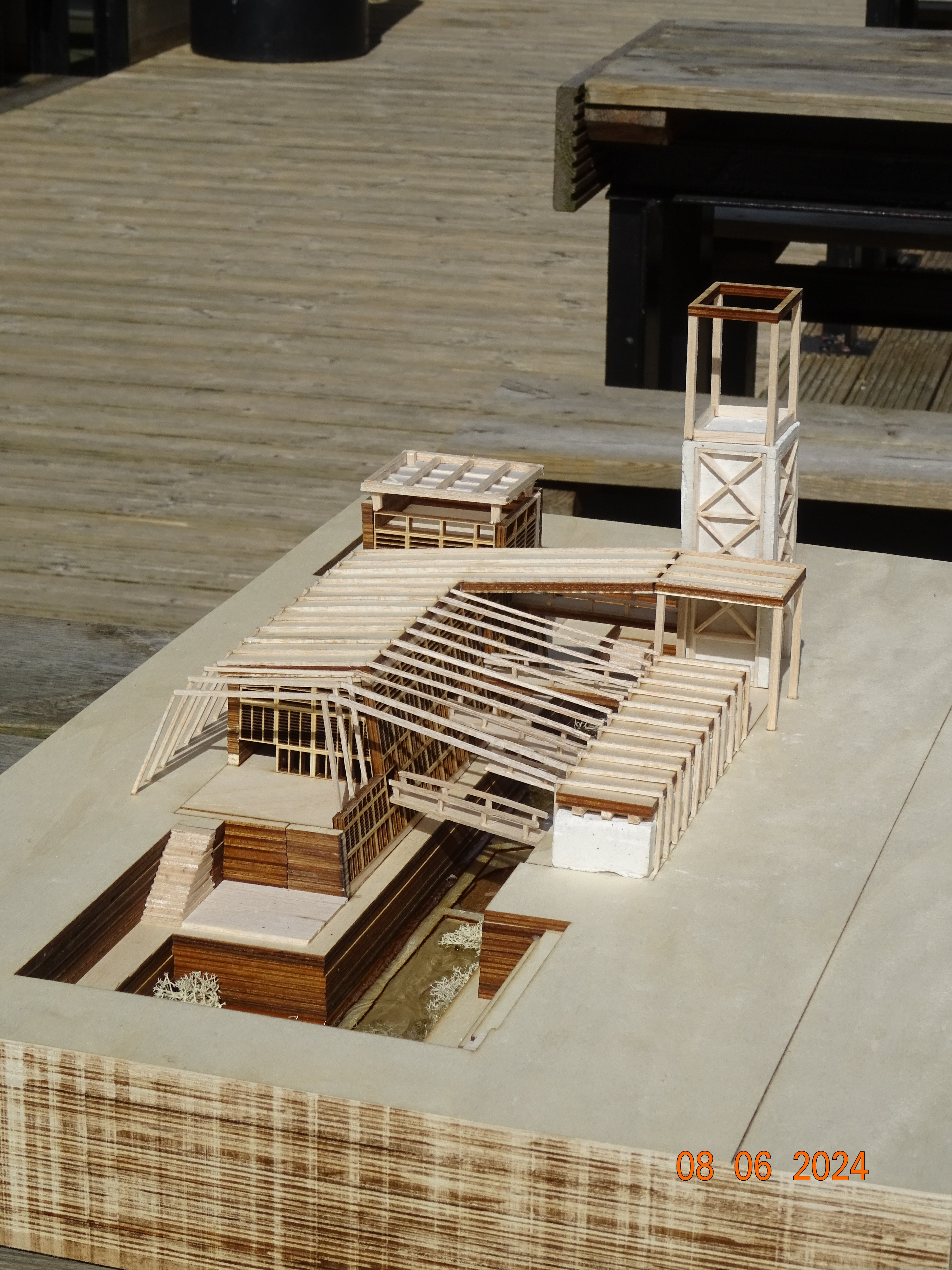
(un)natural adaptation.
THE THREE FACETS
The second space is the ‘pit’, which is a reappropriated part of the old open pit mine, designed to flood in the wet season to create a inclusive home for flora and fauna. The plant life in the pit is specifically selected from local species that can adapt to both the summer and winter months. This space acts as a threshold between the natural and unnatural parts of the building, that the participant must pass through every time they move into a new space.
The pit is the embodiment of the clash of industry and nature. With old buried mining machinery being used as a perch for migrating birds, it is a space where both sides of the portal collide, a temporal graveyard to the extraction that once existed on the site, and as a homage to the evolution of that typology.
The third space is the unnatural collection, that houses the post colonial histories of the site, displaying industrial extractive history across temporalities within the concrete and steel brutalist structure. Just like Rio Tinto, I’ve used existing infrastructure, but instead of using it as a host, I’ve aimed at reversing its use and history to create a space that adds to the ground, but does not take away. In an effort to contrast the Mine or Economic History in South Kensington, as well as the last 50 years, the site will now no longer take from the ground, but instead open it up with a series of oppurtunites for inhabitation for both human and non-human life.
I used this project to critique and highlight the power, reach and scale of these corporations, and what they are capable of, and how design can take these infrastructures and the scars that are left behind to write a new history moving forward.