TYPE: Undergraduate 3rd Yr Designj Project
LOCATION: East Hoe, Plymouth, England
DATE: 7th February 2021 - 5th June 2021
METHODOLOGY:
- Masterplanning
- Photography
- Physical Modelling
- Urban Territory Analysis
EQUIPMENT & SOFTWARE:
- Revit
- Adobe Creative suite
In years to come the planet and all its inhabitants will be exposed to intense global change. Sea levels will rise, the climate will become more unpredictable and biodiversity on this planet will be threatened. The severity of this change is dictated by how humanity reacts now to the pressing issues at hand. The Cartographer and the Treasure aims to challenge the doxa of human exceptionalism by outsourcing the defence of our marine biodiversity through a DNA bank and a cartographer. This ‘outsourcing’ comes in the form of physically extracting and storing DNA in a place where it is protected as a fail-safe, as well as a proactive approach in mapping species, their rituals.

sailing to the bus stop.
EMERGING SUB-WORLDS AND THE URBAN REEF
Our group framework focused on exploring the complexities of Plymouth Sound, and the parallels between its past iconic histories and its ever fading present day experience. Previously being the stage of spectacle and being the anchor of the overall experience of the city, the waterfront has now become a fragmented collection of territories, all in conflict with their varying ambitions and own individual context. In response we created the Sailing to the Bus Stop archipelago, a system formulated through the acknowledgement of existing rituals. We organised our new archipelago through a series of maps drawn from the existing condition that we then superimposed and suspended above a physical model, to locate our islands and areas of activation.

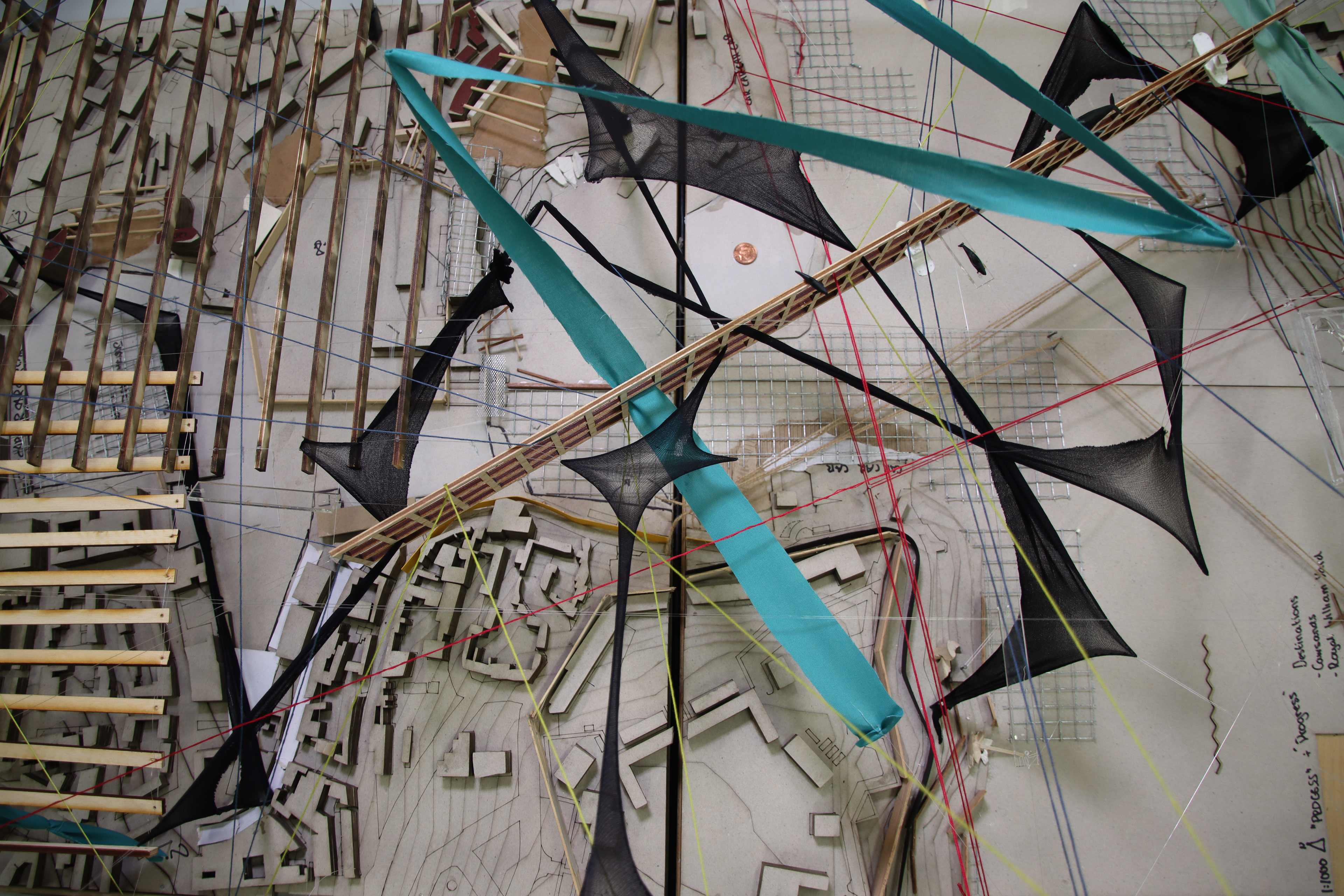
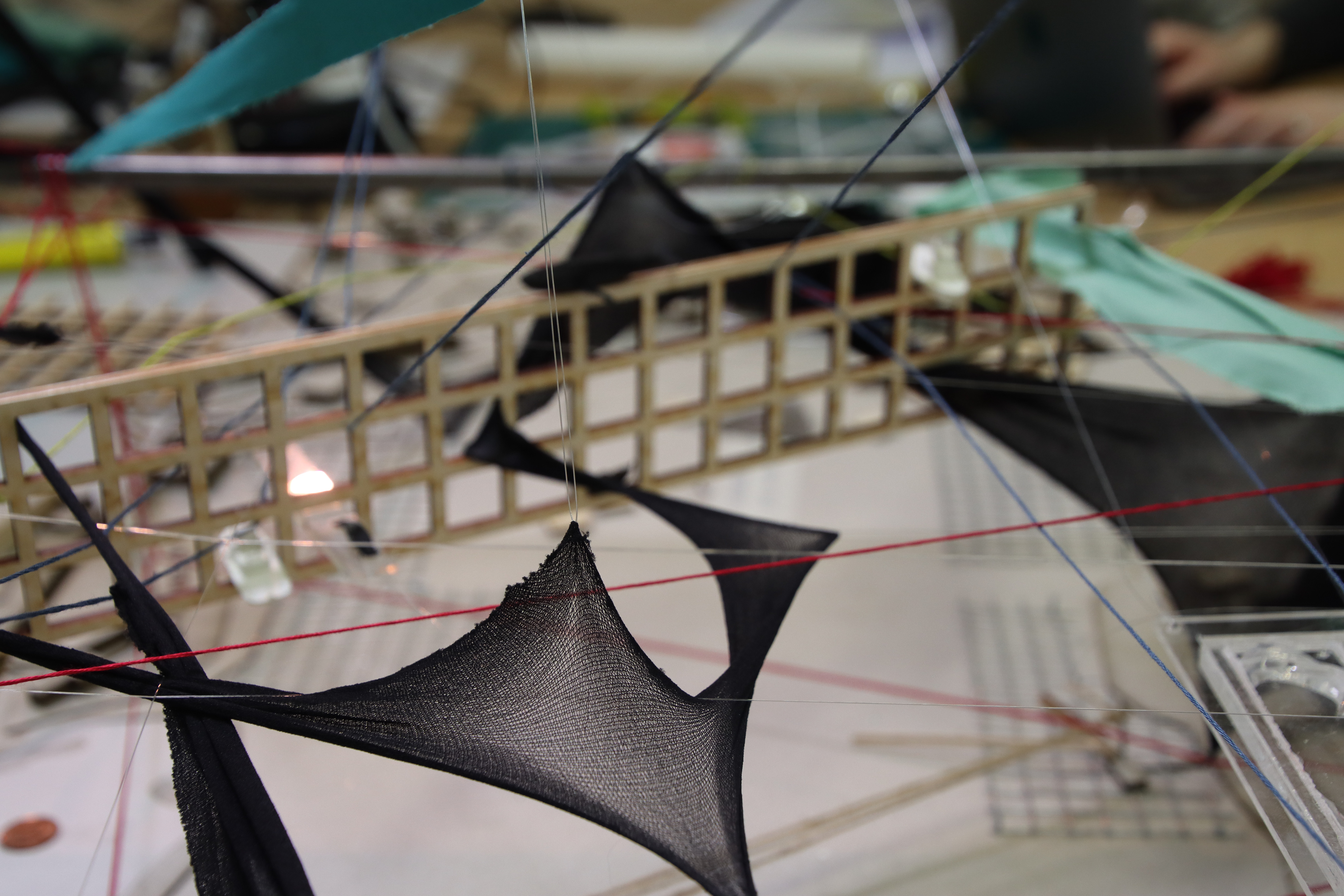
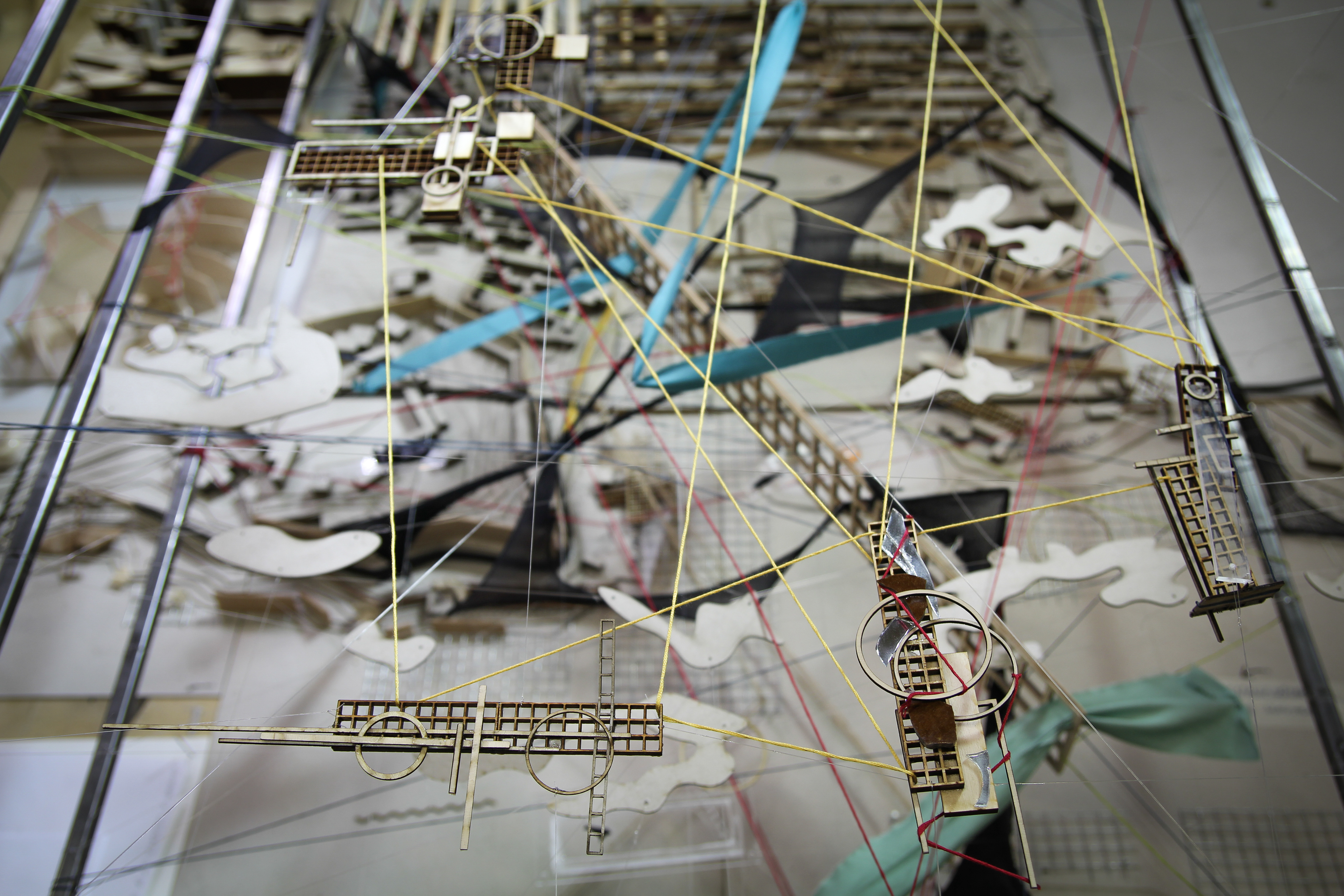
To begin to address Plymouth’s complex heritage, we adopted
a Japanese tradition called Kintsugi. Kintsugi doesn’t treat scars and imperfections as a reduction in value, but celebrates an objects journey through history; and once mended heritage is displayed not forgotten.
a Japanese tradition called Kintsugi. Kintsugi doesn’t treat scars and imperfections as a reduction in value, but celebrates an objects journey through history; and once mended heritage is displayed not forgotten.


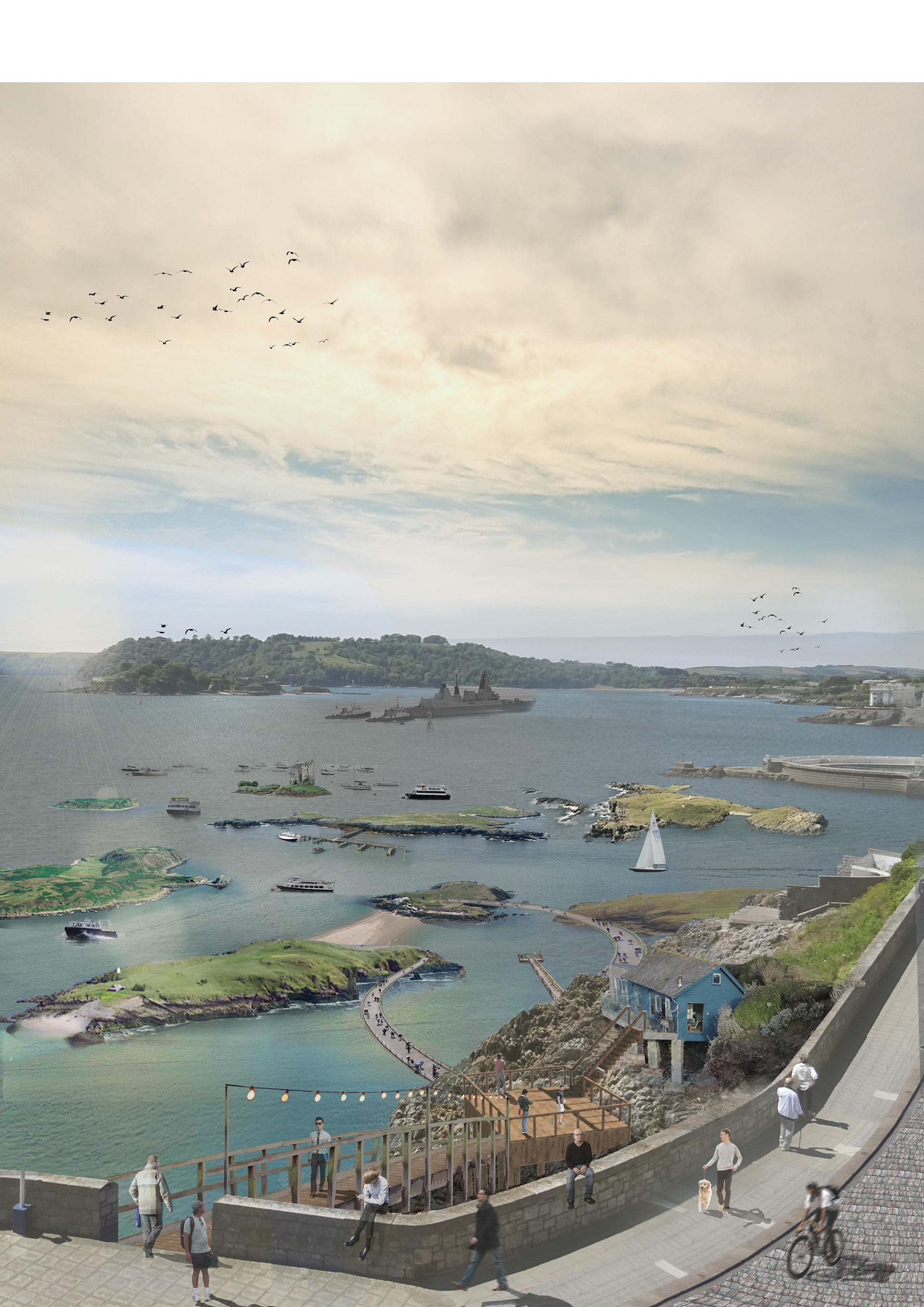


program synthesis.
AIMS, THEMES AND FUNCTIONS
Protective maps can be created, breeding areas can be recorded and Plymouthian citizens can help protect their marine habitats, but will it all be enough? With the global climate projection as it is as it stands are the subsequent impacts controllable? As a response to this future uncertainty, I designed a DNA vault into the project, as a fail-safe if all other methods are futile. With the DNA vault and Cartographers, I aim to both map and encapsulate species of marine flora and fauna.
Counter-maps will be drawn, encoded from the rituals of species themselves, with the aim to publish information and data surrounding, nesting area, migration roots, breeding zones to influence shipping routes and impose protected areas.
Counter-maps will be drawn, encoded from the rituals of species themselves, with the aim to publish information and data surrounding, nesting area, migration roots, breeding zones to influence shipping routes and impose protected areas.
TIMELESSNESS -
I understand at a site and global level that I am dealing with elements of inevitable force, it would be arrogant at an architectural level if I assumed something could be timeless. Within this project elements of the architecture, the function and the message will all project premonitions of longevity, with the DNA vault designed to endure the storms to come to act as an arc for the biodiversity of Plymouth Sound.
I understand at a site and global level that I am dealing with elements of inevitable force, it would be arrogant at an architectural level if I assumed something could be timeless. Within this project elements of the architecture, the function and the message will all project premonitions of longevity, with the DNA vault designed to endure the storms to come to act as an arc for the biodiversity of Plymouth Sound.
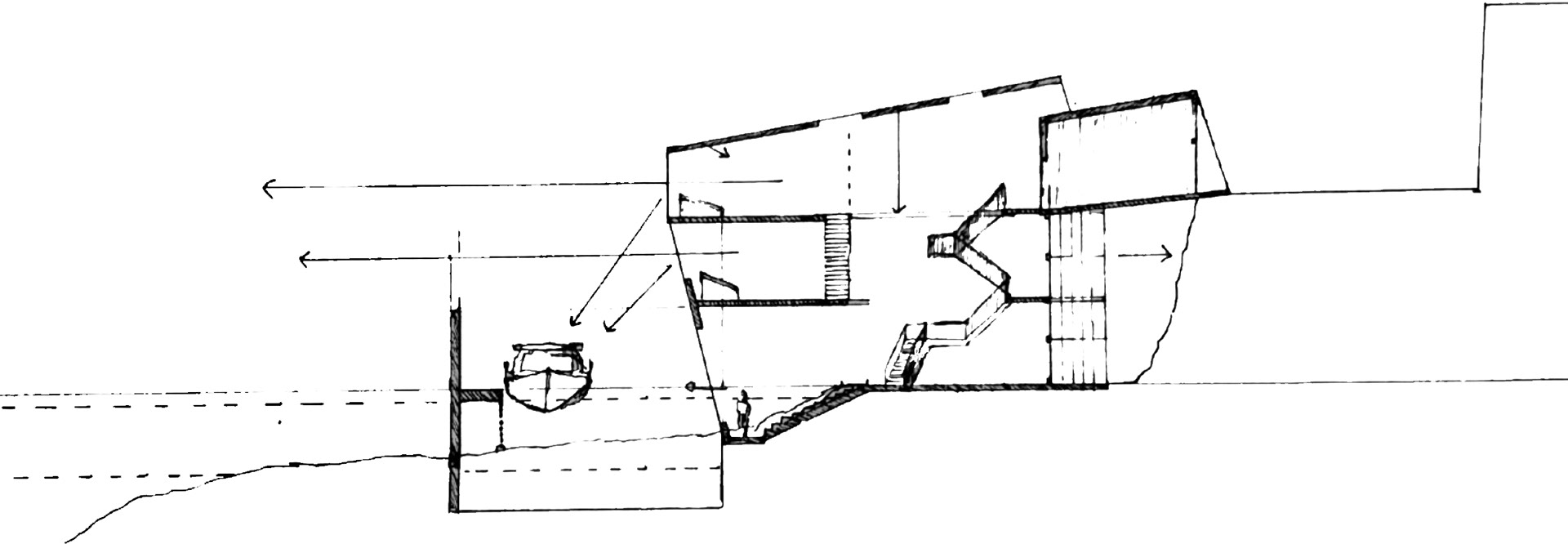


DECENT - The main constraint I had was a 12m drop between the pavement level and the waters surface, with a large area of rough rocky terrain in-between. I intended to use this journey as an experience to expose the participant to the different aims of the project. There is a straight public staircase down the waters edge running parallel to both programatic aspects of the project; providing that intimate access to the water whilst still being set with the context of the project.
VOID SPACE - Void spaces are present at a small scale and a larger scale within the project. Void space at a small scale aims to focus on providing areas that remain undefined, where axis within the project can overlap, pass by one another with the intended result being a form of social exchange where information can be shared either consciously or subconsciously. Walking past a window, overhearing a conversation, or going down for a swim can all lead to an exchange .
converging axis.
SYNERGY OF PUBLIC AND PRIVATE SPACE
For this building to be a success it need to be able to provide engagement for the existing proactive people within our society but it also needs to access the more passive members of our community. Public access is key, not only directly into the building or down to the water but passively for pedestrians. On our masterplan, The Cartographer and the Treasure is set along our new completely pedestrian coastal path. This presented the opportunity to engage with every pedestrian as they pass by, at this crucial axis you can either enter the building, descend down directly to the water or simply just transit through a short internal space to continue on your journey. Unknowingly people are engaging with the space the space that is used to un-encapsulate the DNA for future use. It is at this junction where public and private space are first intertwined, the connections from here depend on what journey you take will correlate to whether the boundary between public and private is blurred in purely visual sense or connected more intimately.


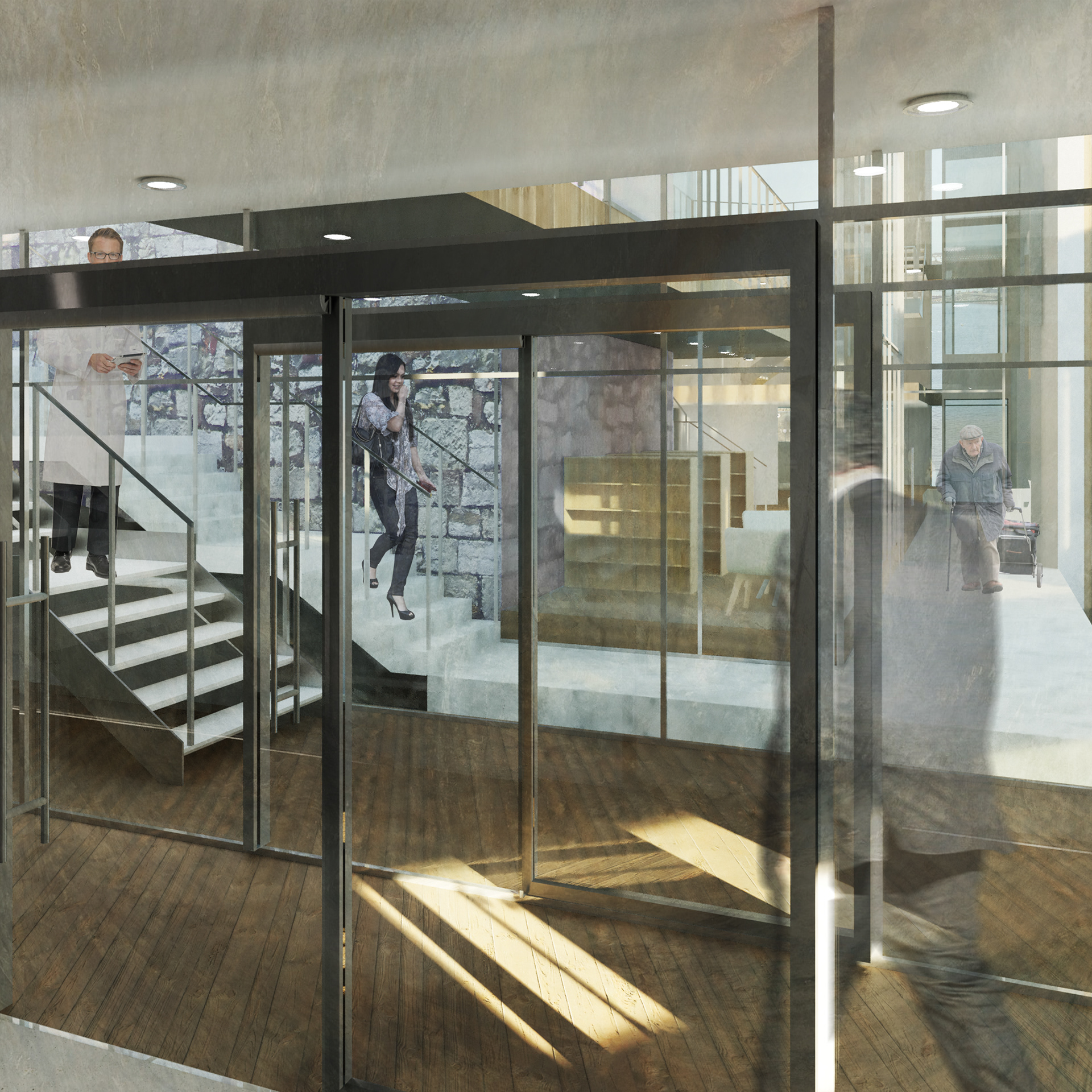


challenging timelessness.
FORM ORDER AND HIERARCHY
With a future of such uncertainty, architecture must prognosticate and respond with aspects of timeless thinking. To assume architecture to be timeless would be arrogant, and to try and stop an inevitable force would be futile; but to design with prophesy in mind could allow for the opportunity to create a building that is inclusive to its future and has prepared for such events. A building comprised of aspects of permanence and temporality, designed to both withstand and surrender, whist enabling the idea and the function to live on.


